

advice
Journal of Emotions
NEW ENTRY
******************
I am overwhelmed. If there was a day I am full of emotion, it’s today. Life has been too much and I am having a hard time taking it all in. Everything from health to finances has been difficult. I often wonder why it isn’t just one problem we have to deal with, but a mountain of them. Yesterday I went to the pain management doctor and he about came out of his chair when I told him my Rheumatologist was going to keep me on one medication and add another. He didn’t like the idea of me being on both simultaneously. It gave me a lot to ponder as I knew something wasn’t “right” with me.
This feeling is the same one I had before my last flare. Maybe the thought of another flare put me in a foul mood, I don’t know, but I do know the mood is lingering. I keep thinking I’m more tired than usual but that would not explain the lingering rain cloud over my head. I tried hard today to be positive, until this……
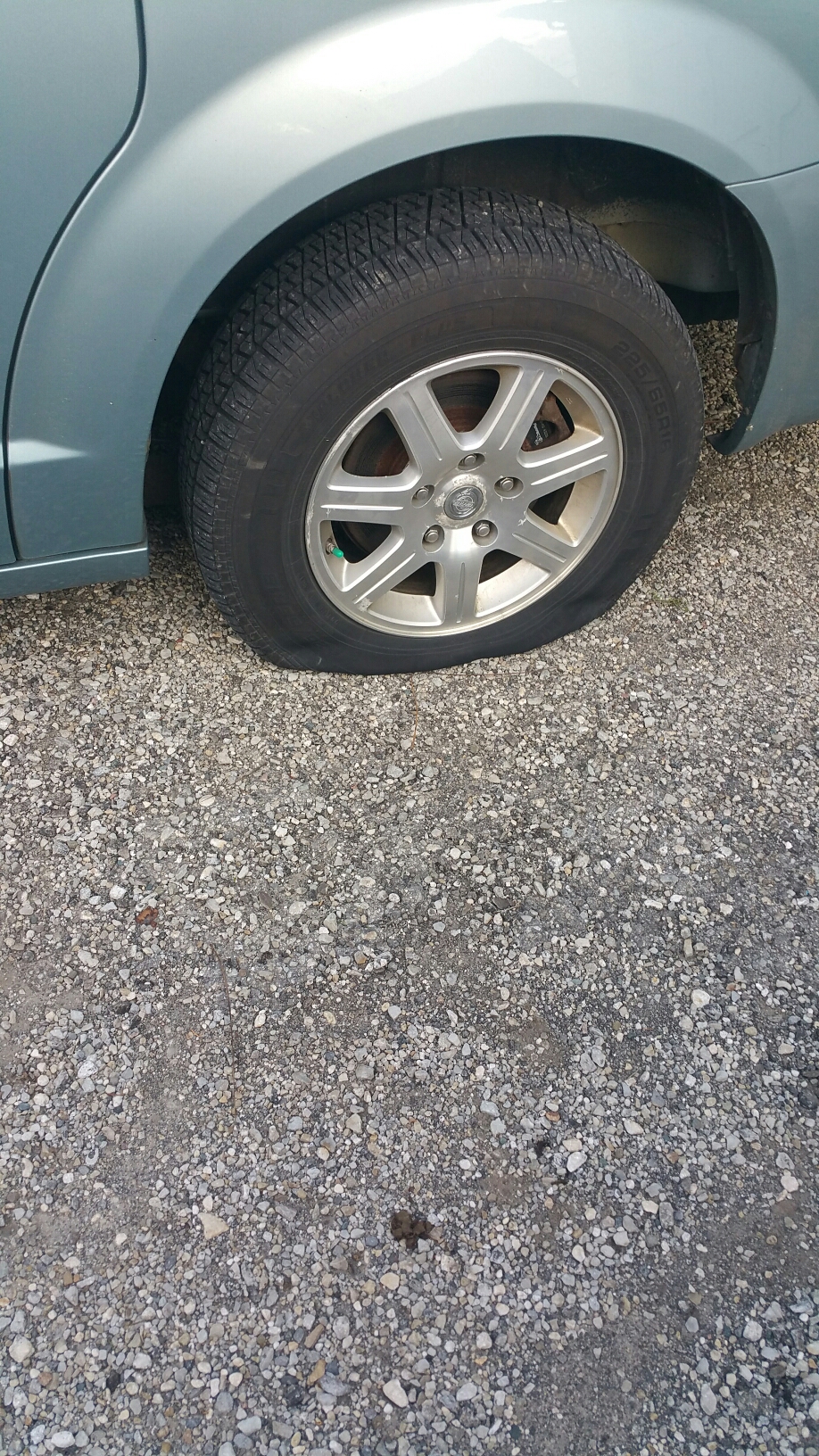
……. a flat tire…..
We just started a layaway for our kid’s Christmas and now I wonder if we will be able to pay it off at the rate we are going.
I made a phone call to the pharmacy on Tuesday. I asked how much I’d be paying out of pocket for my medications once my high deductible insurance turned over. We recently paid off our van, but between the increase in our mortgage payment due to tax increases and my medication, we will see no difference in our monthly budget. We will still be broke. I looked forward to a tax refund but that will be paying for our mountain of medical debt and spacers for my oldest son. We just can’t seem to get ahead. I know we aren’t alone. Many people struggle to get by from month to month, but I wish this was the only thing that kept me up at night.
Sometimes I lie awake listening for my son in the next room. I worry about him seizing more than I admit. He was approved to get an Embrace watch but they keep pushing the date back for it’s arrival. It’s supposed to alert us to a seizure by using an app on our phone. I will breathe a sigh of relief when it comes for many reasons, but nighttime seizures are a fear (for many with epilepsy). He is so poorly controlled right now that any help we can get monitoring his seizures will help us determine how to treat him and how he is responding to that treatment.
On top of his difficulties, my health has declined shapely this summer. I know I am sick, I can feel it in more ways than one. If I don’t take some of my meds, I feel like I have the flu. I am tired and depressed. I keep praying and working with my doctors to get me the right medication to help with all my symptoms. One thing is certain, RA will not steal my voice.
Writing is all I have right now. I don’t work, and I am grateful for that, but it is difficult to be a one income family with extensive medical bills. I hope I can make something out of our difficulty. That is what I am about, making something wonderful out of the worst of situations. I am going to keep trying and I am going to keep praying for the ability to write pieces that will help others feel like they have a common ally in this world. It’s this girl. I’m right there struggling with you. Maybe we will see something great together.
*d*
I have decided to pick up and write during highly emotional times for me and see what comes spilling out. I will update this post with those thoughts as they happen. I will do mimimal editing to protect whatever voice I use while writing. Understand, what comes out of me during a highly emotional moment may not always make sense but I want to share those moments. These are moments I believe we all have. My hope is to put into words some of the issues we all experience yet rarely escape our lips.
Entry 1: Written while thinking about how I was going to move past my diagnoses of Rheumatoid Arthritis (RA) and Fibromyalgia. I have been experiencing pain I had not expected. I am experiencing an RA flare and I went downhill very quickly. I can’t get around in the morning without assistance because of the severe pain I experience specifically during the morning hours. I am struggling to find purpose in the addition of this disease on top of already having a special needs child with his own complex diagnoses. ~
A diagnosis makes me think about death. I can’t help it. When the name of disease dropped from the physician’s lips, I immediately thought about the worst case scenario. I worried about every unfamiliarity, drug, and all the new phrases thrown my direction in a language I didn’t understand. I didn’t just cry, I wept. My tears came from such a deep place inside me that it almost felt as if a piece of my soul were escaping with them. Days were blurry. All I remember is the hurt I felt after knowing nothing will ever again be the same. There will be things that will no longer be able to be accomplished, words that will now remain unspoken, and dreams that will now have to be relinquished. I was in mourning, yet I was very much alive. Mourning my life while I was still living was a contradiction. I struggled with all things and I wanted to give up on finding myself again.
Then creeped in a small glimmer of light. It was hope. It was the knowledge that life is not over but still meant to be lived. I could not live my days as if it were already gone. If I kept choosing to mourn life, I had already given up on hope. So I chose hope. I chose faith. I chose to live. I chose to use those words that choked meaning out of my life to find a new purpose.
I see who I am. I see who I was. I had to change. I wanted to stop distracting my life with things that kept me from fulfilling this life. When life changes so dramatically, the span of a lifetime shrinks. There is no forever, there is only today. There is today to make a positive change in the lives around me. There is today to show others love. Death usually stirs up these same feelings in so many people but after waking away from the casket, much is forgotten. What changes are made are often temporary and life goes back to the same distractions taking away from a life rich with meaning.
Fear of death also ruins many things. Death hurts. It especially hurts when we have loved the deceased so much. To avoid that deep anguish, we pull away to protect ourselves from feeling that way again. But pushing away others to avoid future pain limits the joy that should be experienced now.
I have been depressed, have had panic attacks, and worried myself into distress over the unknown of diagnoses and of life. In essence, I robbed myself time to trust, the ability to have faith, and additional moments to love.
I essentially drew myself so close to the only dark spot in my life that it shrouded every last bit of light. I decided to hide in the only dark corner and hold onto my fear. I also hid there alone. I wanted to stay in my pity and cry about how unfair life had become while refusing help. It felt good to finally take a hand and say, “I can’t do it alone.”
Asking for help is a hard thing to do but it is a freeing moment. I didn’t have to stay alone in my dark. I could embrace those trying to pull me into the light. In the shadow of life is no place to be. When facing a challenge, go where the path can be seen, don’t walk in the dark. Choose to press against that darkness and love despite the hurt. Pull those hands close and love those who follow you anywhere. A lifetime of love is worth any eventual pain. Pain is better handled when leaning on love. No diagnosis or pain is worth giving up this life. It may make it harder. It may be lonely but run toward the light. Run toward love, don’t stop living because of one speck of darkness.
*d*
.

A Matter of Perspective
One of the biggest challenges special needs parents face is trying to unravel the complex issues associated with our children. Sometimes it’s asking, “Why won’t he eat?” to “Why is she so anxious during social events?” Parents like my husband and I not only have to deal with issues such as these but we are also trying to understand everything associated with him medically. All these things intertwine like a complex web and pulling at any part of this web will no doubt effect something else.
For example, my one of my son’s diagnoses is epilepsy and when his seizures become poorly controlled, we have to decide the next step in management. Most of the time we choose to increase the dosage of his current medication before trying another medicine or approach. We also know his behavior is directly effected by how much medication he is taking as he has been known to have a low tolerance for anti-epileptics at high doses. This has made finding the right therapy for seizure control challenging. We want control but we also don’t want to see him overly aggressive and causing harm to himself or others.
A few years ago he started a new medication to treat his primary diagnosis, Tuberous Sclerosis Complex (TSC). The medication is normally used to treat cancer but it has been found to be a promising drug to treat TSC. A year after starting this medication, he was seizure free but he also stopped eating. Feeding issues were not new to him but giving up eating was and we became concerned. After asking adults on the same medication, speaking to his clinic and a nutritionist, we have a better understanding of how the medication may be effecting him and a plan to help him get the nutrition he needs, but we still don’t fully understand how to unravel this complex issue. He could be refusing to eat because of his autism, medication, or behavioral issues. We also realize that we could be partly to blame for his finicky eating habits.
These two examples are not the only ones I could list but they are the issues that have caused the most conflict in our lives. It is particularly difficult for us to pull our son apart from his problematic issues and fully understand how to manage them, so trying to explain it to others is almost impossible.
I know my husband and I are not the only parents who are exhausted by the questions and unwanted advice over subjects we are trying to understand ourselves. We started our son in early intervention at four months of age. I have worked with therapist for years discussing his different habits and behavioral issues. We have spoke to his team of doctors, nurses, psychiatrist, nutritionist, and many more to try to give us the best chance of helping him live the fullest life possible. After seven years, there are many questions that we still cannot answer. There are many questions that don’t have answers. I want to share a few insights to what it feels like for special needs parents when conflicts arise over our child’s issues.
1: Unwarranted parenting advice makes us feel like we haven’t done enough for our children.
Although we have spent years with professionals to try to help our child work through various problems, there is no magic fix. There will still be times when he will have a meltdown, inflict harm on himself or others, and many other things we’d rather not see. This does not grant anyone the right to offer advice when it isn’t needed. The truth is, we don’t like seeing our children struggle either. That’s why we have been working very hard to help our children. Don’t forget that they are often struggling in ways we don’t understand. If you haven’t been working just as hard at helping, then stop the unwarranted advice.
2: Dictating to us about what you think our child should or should not do causes unwanted stress.
We have been there. There is a party and all the kids are lined up, ready to play a game and someone says, “Everyone plays, even (insert our child’s name here)”. We have even been told we HAVE to sing The Happy Birthday song to our son even though it causes him anxiety and will set off a meltdown. We do want to help our child test his boundaries but we are also well aware of those boundaries. We certainly don’t appreciate someone else making assumptions about what our child can or will do. If we choose for him not to participate, we have a good reason and if that isn’t good enough, prepare to get what you have asked for, anxiety from our child or a stern “no” from us. Asking before assuming is always the best approach.
3: Pointing out our child’s flaws is very upsetting.
I don’t understand why others feel the need to point out our child’s issues, like we are blind to them. We are obviously aware of these things, it is OUR child. Instead, try acknowledging the good things our child is trying to do.
4: Fixing our child for us undermines our parenting.
Trying to “fix” things, especially without our consent is not welcome. If we don’t offer our child fruit at the dinner table, we don’t want anyone else to either. If our child hasn’t had a haircut for a while, there is probably a reason for it. Don’t try to save the day with these “fixes.” We are not neglecting our child when we choose not to do or offer things that others may feel he needs. Sensory issues are usually behind the anxiety he feels over getting a haircut or being offered a new food (with a new look or texture) so unless you are a expert on sensory or anxiety issues associated with autism, please stop. The best thing to do is ask, “How can I help?”
5: Ignoring requests associated with our child will indeed causes friction in our relationships.
My late grandfather meant well when he would ask my son if his food was “good” every time my son sat at the table with him. My son’s response to the question was always the same, he’d scream and hit himself. This never stopped my grandfather, he’d keep asking. This caused us a lot of anxiety because even getting our son to the table was an accomplishment. Mealtime is usually the biggest cause of anxiety for our son. It takes a lot of effort to get him to sit at the table for a meal and getting him to eat is an even bigger deal. After all the work involved, it would be undone with the same question from my grandfather, “Is that good?” Ignoring the obvious friction the question caused made mealtime a problem for all of us.
Sometimes an innocent question or action could cause anxiety for our child, so we ask our requests regarding our child be respected. Don’t be the reason for additional stress.
The bottom line is this; we need the support of those around us. We understand it’s hard for those who love our child to feel helpless because they want to help. The truth is, we feel helpless too but we are doing our best despite the fact that we don’t have all the answers. We want to be trusted to know what is best for our children. When we all work together, we have the best chance at helping these wonderful children have a happy future.
*d*
Breathe…
*d* is experiencing some awesome success with her writing and feeling a little exposed. It’s understandable since this blog is like our diaries, sharing all the angles of life as we experience it. So, I thought of this song to share with you and *d* because even though it’s like ten years old, it is and always will be good advice.
“2AM and I’m still awake writing a song. If I get it all down on paper it’s no longer inside of me, threatening the life it belongs to. And I feel like I’m naked in front of the crowd ’cause these words are my diary screamin’ out loud and I know that you’ll use them however you want to.” ~Anna Nalick
A Brother’s Lesson in Disability
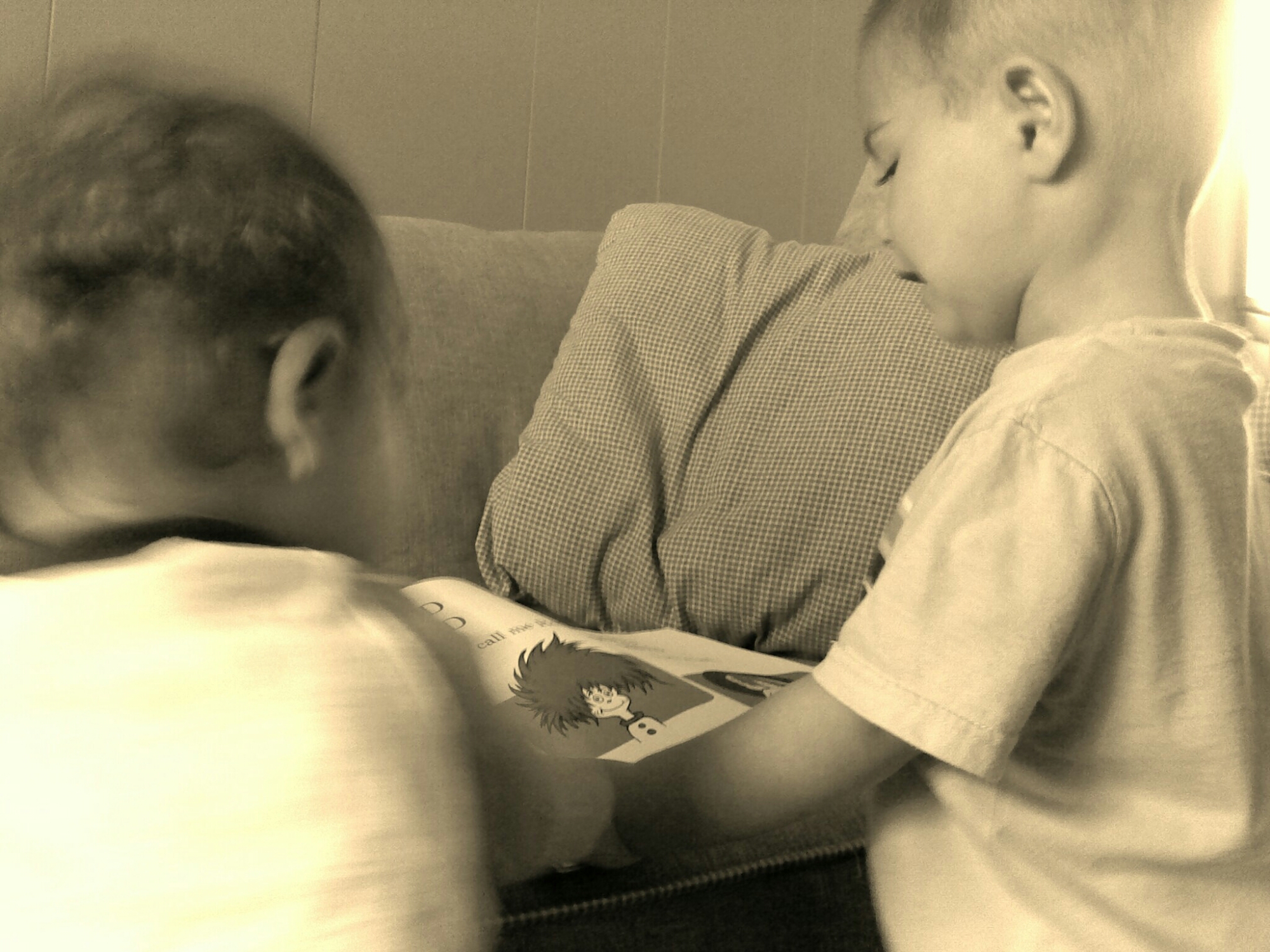
My disabled son is seven and he is the second oldest of my four children. My special needs son was diagnosed with Tuberous Sclerosis Complex at three months of age. A few of his secondary diagnoses include epilepsy, autism, and intermittent explosive disorder. He is considered multi-disabled. As he grew, his delays became more apparent to all of us, even to my when my oldest son. He and my youngest son are 17 months apart and it was very exciting for him to have a little brother of his own. It didn’t take long for him to notice that his little brother didn’t play with him as he anticipated, and that his little brother was also sick.
At four months, my youngest son developed a rare and catastrophic form of epilepsy called Infantile Spasms. These deceivingly innocent looking seizures occur in clusters and are very hard to control. He would have multiple episodes a day and the seizures would be only a few seconds apart and could last up to fifteen minutes. All of our best attempts at controlling the spasms eventually failed. This made it hard for him to reach developmental milestones. His brain was just too bombarded with epileptic activity to make any significant developmemtal progress. So as both my boys grew, the developmental gap also grew. My oldest would be playing ball, stacking blocks, or drawing and my youngest could only watch. His body was weak and he had limited mobility. He also had significant speech delays. It was obviously hard for all of us, but especially for his big brother who wanted to play with the “little buddy” he eagerly anticipated. How could I explain to a three year old why his little brother couldn’t play or talk? How could I help him grasp such a complicated subject in a simple way?
My oldest was very familiar with his room. We spent alot of our time playing there. I first asked him where all of his favorite toys were and he happily showed me. Next, I blindfolded him and asked him to bring me those same items. He did find and bring me what I asked but it took him a while and he needed my help. After that and a few laughs, I explained, “Your brother is just like you, he just sees things differently. It may be harder for him but he knows what’s around him, just like you knew your room even with the blindfold on. And just like you had to take your time, he has to take his time to do all the things he would like to do. You needed me to give you directions on where to go and we have to do the same for him. You eventually got to your favorite things and he will too. You are one of your brother’s favorite things and he will find you. Give him time.” I also reminded him that even though our experiment was hard, we still laughed and he needed to laugh with his brother, even when it gets hard. He smiled and I hoped something stuck but every day from then on I still remind him, and all four of my children, of one or all of these things when life gets hard, give it time, offer help, give lots of love, and never forget to laugh.
*d*
Healing Hearts

The Road of Suffering and Honesty
There have been plenty of times when I have wished I could be someone else. This usually happens when the “envy monster” whispers in my ear, “Look who has it better than you,” or “They have it all!” and I get the feeling in the pit of my stomach that groans about how life has been unfair to me. It’s hard when I hear when these same people have purchased a new car or won the lottery and the only “lottery” I feel we have won is that of incurable and obscure diseases. While other parents think about vacations, taking kids to practice, and play dates, we may never afford future vacations, I am often debilitated due to my Rheumatoid Arthritis, and I have to consider my son’s medical and behavioral issues if the rare opportunity for a play date arises. I think about illnesses every day. It is consuming and it eats away at my me. Bit by bit, the worry, guilt, and fatigue has at times compiled into depression. It would seem happiness is far fetched on the uphill battle we often face, but it isn’t. I can affirm that I have experienced envy, guilt, anxiety, depression, and sadness at the hands of multiple diseases. They have robbed me of sleep, peace of mind, and the luxury of quick decisions. Everything in our life has to be carefully thought out and planned. Life is lived one day at a time and we are sometimes barely getting through the day. So why am I so happy?
For one, I live by faith and believe my life has a greater purpose. I believe I have learned to be a better person through all of my suffering. Suffering is inevitable and to many, suffering is pointless but I dare you to consider the contrary. I have had a better look at the lives of others who have suffered around me by experiencing the same. I was ignorant and there was so much I didn’t understand until I also had to experience my life at it’s lowest. It was from the bottom where I could appreciate the strength of people who were experiencing great difficulty. It was also there where I became more aware of my weaknesses and failures and desired to be a better person. I learned how to find strength and happiness in the face of adversity.
It sounds simple but I no longer hold myself to an unrealistic standard. I allow myself to feel envy, sadness, and heartache and it doesn’t make me a bad person. Too often, I feel like I have to live up to some ridiculous, unspoken standard that says I have to be happy, or at least pretend to be happy all the time. I don’t. Life has been unfair, other people do seem have it better, and there are numerous health issues in my family. The pain is real so shouldn’t the acknowledgement of my own feelings also be real? Once I decided this, I also stopped sugar-coating my response to the question, “How are you?” I give an honest answer and if someone didn’t really want to know, they will not likely ask again. When did it become necessary to omit difficulty out of normal conversation? Difficulty is a part of life. Why should I feel guilty about talking honestly about my life?
I have also put unnecessary guilt to rest. I have spent too much time feeling guilty about things I could not prevent or did not cause. Guilt by its own definition should only be felt when one purposefully does something in contrary to what he or she knows is right. Trying my best is not something I should feel guilty about. Life should not be based on hypothetical scenarios that can’t changed. What’s the point? I also stopped feeling guilty about what I could not do. If life demands that I leave the laundry pile up and the house remain dirty, so be it. My house and my laundry will wait for another day.
On that note, I stopped telling myself that I had to maintain the perfect image. I made myself crazy cleaning house, painting walls, and making everything around me look perfect when I was falling apart on the inside. Yes, sometimes having other areas of my life in order helps me feel better but it should never take priority over my own or the children’s needs.
Lastly, I remind myself that everyone is struggling with something, even those people I envy and people like me who try to maintain that perfect appearance on the outside. Honesty can be very freeing. I appreciate those who are also honest when I ask, “How are you doing?” It helps to know I’m not walking the difficult road alone.
*d*
Should We Forgive or Forget?
Have you ever fooled yourself into thinking that you don’t care? For example, has someone broke your trust by sharing secrets about you or have you caught a group of co-workers gossiping about you and although it hurt you said, “I don’t care”? You knew when the words were muttered that it was just an illusion but for some reason you thought by saying the words the pain would cease. I’ve done it. When things like this happen, I think of what’s next and the old saying “forgive and forget” comes to mind. I want to forgive but forgetting hurt is difficult.
Hurt is an unfortunate part of life. No matter how much we shield our feelings from people, events, and unpredictability, hurt will eventually find us. Since hurt is coming, it may be a good idea to think about how hurt should be handled once it arrives and how we act once we decide to let it go. There is always advice to be found on the subject. In my thirty plus years of life, the quote, “No one can make you feel that way without your permission,” has surfaced multiple times. Maybe I don’t understand these words as I should, but how I feel doesn’t always seem like a controlled emotion. I have been at the receiving end of insults and lies with the sole purpose of hurting me. The culprit knew just what to say and went straight for the kill. If my enemy knew how to cut me where it hurts, wouldn’t I? We know how to hurt each other because we know what would hurt us. There is no internal process with me that can shut off the negative feelings resulting from negative actions. Sometimes I don’t feel like I have a choice about what I permit to hurt me, just who.
So brings us the quote, “Forgive and forget.” It is a lovely sentiment but somewhat foolish. Yes, in a perfect world we could forget all the bad things someone else has done to us but that would be difficult, even for someone like me who has a terrible memory. So, I don’t think we should forget. Why? If we were to forgive someone for continually hurting us and allow that person back into our life, we can predict with some accuracy what will continue to happen. We will get hurt. We have to allow ourselves some recollection of the way other people treat us. If not, we will have to start getting used to fooling ourselves into thinking that we don’t care. I am tired of pretending that I don’t care about how I have been treated. I am tired of feeling like I will never be good enough to earn equal respect with some people. I am a reserved person in many ways and my trust isn’t easily earned. It is hard to gain my trust again once I have been hurt. So I have had to teach myself to back away from some people and keep a protective distance. It is a hard thing to do because I like to give people as many chances as I can to have some sort of relationship with me but that isn’t always possible. The best I can do is to forgive differences but not forget that my trust was broken.
That is just how life is; we can’t get along with everyone and not everyone wants to get along with us. Honestly, there are people who don’t want to get along with anyone else. It is also a great part of the diversity of being human, we are all so unique. With this we must accept that pain will come at the hands of others. The best advice I can give about getting along with others is this: make sure opinions about other people are not based on any opinion other than your own, especially not based on gossip. Also, never judge someone based on outside appearance. I have received some crappy gifts wrapped in pretty packages. Haven’t you? This means we will sometimes be hurt by people before we know what they are made of, but we will have the peace of mind that we know for ourselves.
Upon finishing up this post, I ran across a verse of the Bible. Not everyone is religious but this verse is a good piece of advice that sums up what I want to say very well. Luke 6:31 (NLV) “Do to others as you would like them to do to you.” I have had a hard time wondering why some don’t allow me an opportunity to get to know them. At a recent trip to the grocery store, my husband and I ran into a mutual acquaintance. I have previously shared with my husband that she has been known to avoid me or fails to even acknowledge my presence. On this day, she did it in front him. She spoke to him for a minute and I said “Hi!” She then walked away. She heard me, looked at me, and proved my case. My only question was, “Why?” The times I have spoken to her have been pleasant enough but what about me makes her shut down? I may never know. I can speculate that maybe she formed her opinion of me based on gossip, maybe my shy nature comes off poorly (I get that a lot), or she just chooses not to associate with me. I don’t know but I will continue to try to give her a greeting or smile, even if she doesn’t like it because that is how I would want to be treated. Maybe someday she will return the pleasantries.
I know when I am treated like I don’t have feelings, it hurts. The only thing I can do is try harder to follow a good piece of very old advice and treat others kindly. I know I won’t always make the right choices so I will have to rely on someone else to forgive me but I can’t expect them to forget the way in which I have hurt them. All of us will make mistakes, how we handle our own mistakes and those of others may define who we are and how happy we want to be. When it comes down to it, don’t most of us want to become better people, if not for someone else, at least for ourselves?
*d*
 CrossRoadTrippers