Living in the Gray

It’s warm today and she’s resting on her beach chair. The sun warms her face as she quietly hums the song coming from her headphones. The beach is noisy today but she’s trying hard on focus on this relaxing moment. She concentrates on the cool air that wisps across her toes and despite the noise, she drifts slowly off to sleep.

“We’re done,” cuts in a voice that interrupts her music and startles her awake.

“Thank goodness,” she sighs as she begins to move forward and out of the M.R.I. machine. Her daydream was over. She felt fortunate to have drawn her focus away from that confined and noisy space. But a feeling of disappointment came over her. She wished her moment away wasn’t just a dream. In fact, the last few months for her have been like living in a nightmare.

A few months ago she began to feel sick. She was tired, her body ached, and she felt like she was coming down with the flu. She took a couple days off work and when it was time to return, she still didn’t feel better. The weekend passed and she still couldn’t shake what she thought was the flu or some sort of virus. She returned to work and held strong, hoping her symptoms would improve, but they never did. The symptoms and the addition of widespread pain was beginning to disrupt her life. She couldn’t concentrate at work and by the time she got home, the extreme fatigue and pain kept her from keeping up with her normal responsibilities at home. Deep in her heart she knew something wasn’t right.

It began to slide into every aspect of her life and she knew she needed answers. She was disappointed to learn that when she went looking for answers, she’d only end up with more questions.

“So, what’s wrong with you?” she would be asked.

“I don’t know.”

“What do you mean you don’t know? Didn’t you just have an M.R.I.?”

“I did but they couldn’t find anything,” she said feeling defeated.

“All that money spent for nothing?” Her heart sank hearing those words. She had hoped others would see her quality of life would be worth the investment.

The time and money she invested in searching for an answer was only feeding her increasing guilt, but she kept reminding herself of why she was searching. She often had to keep going even when she felt like the doctors had also given up.

“The doctor gave up on me when I didn’t fit the diagnosis he had in mind, please don’t give up on me too.”

No one wants a diagnosis, but everyone deserves a chance for treatment and hope for a better quality of life. Those living in the gray area between health and a diagnosis are lost. They are always searching, researching, and asking questions. They are often submitting themselves to tests and seeing various specialist when they know the financial strain and time consumption involved. They are not crazy, their symptoms are not in their head, and yes, they are suffering. They are like Erin in my story. She is an intellegent, loving mother of two who works for a living. She is active in the lives of her children, but she also knows something with her health isn’t right.

The woman in the story could be my own mom who searched for 55 years before receiving a diagnosis. She could have been me. I knew something wasn’t right with my own health for over ten years. After various doctor’s appointments and all of the same tests and questions, I found my own diagnosis after plenty of research. My diagnosis finally came after I asked my physician, “Could you please test my blood for Rheumatoid Arthritis?”

People seaching for a diagnosis want you to know:

I am suffering.

I do need answers.

I need support and understanding.

I need help.

Do not judge me.

Don’t ask me questions about my search and then cut me down.

Please don’t offer alternative healing until I have a diagnosis.

Don’t tell me it’s all in my head.

Listen to me.

As for Erin, she is going to keep searching because she needs answers so she can have hope for a better future, for herself and for her children. She desperatly desires the chance to experience life without the disruptive symptoms attached to an unknown diagnosis. She deserves to get up each day and know what she’s facing. She deserves a chance for a fair fight. She and all people living in the gray zone of the undiagnosed want and deserve the same.

*d*

image

Chasing a Diagnosis

We sat on her family room couch sorting through her photos. Occasionally one of us would stop and show the other a photo, laughing or reminiscing about the story behind it. I felt like a kid again, sitting in my childhood home reliving old and happy memories with my mom. Then she paused, her fingers resting on a photo. The smile had vanished from her face. “What? What is it?” I asked. I noticed her demeanor had changed.

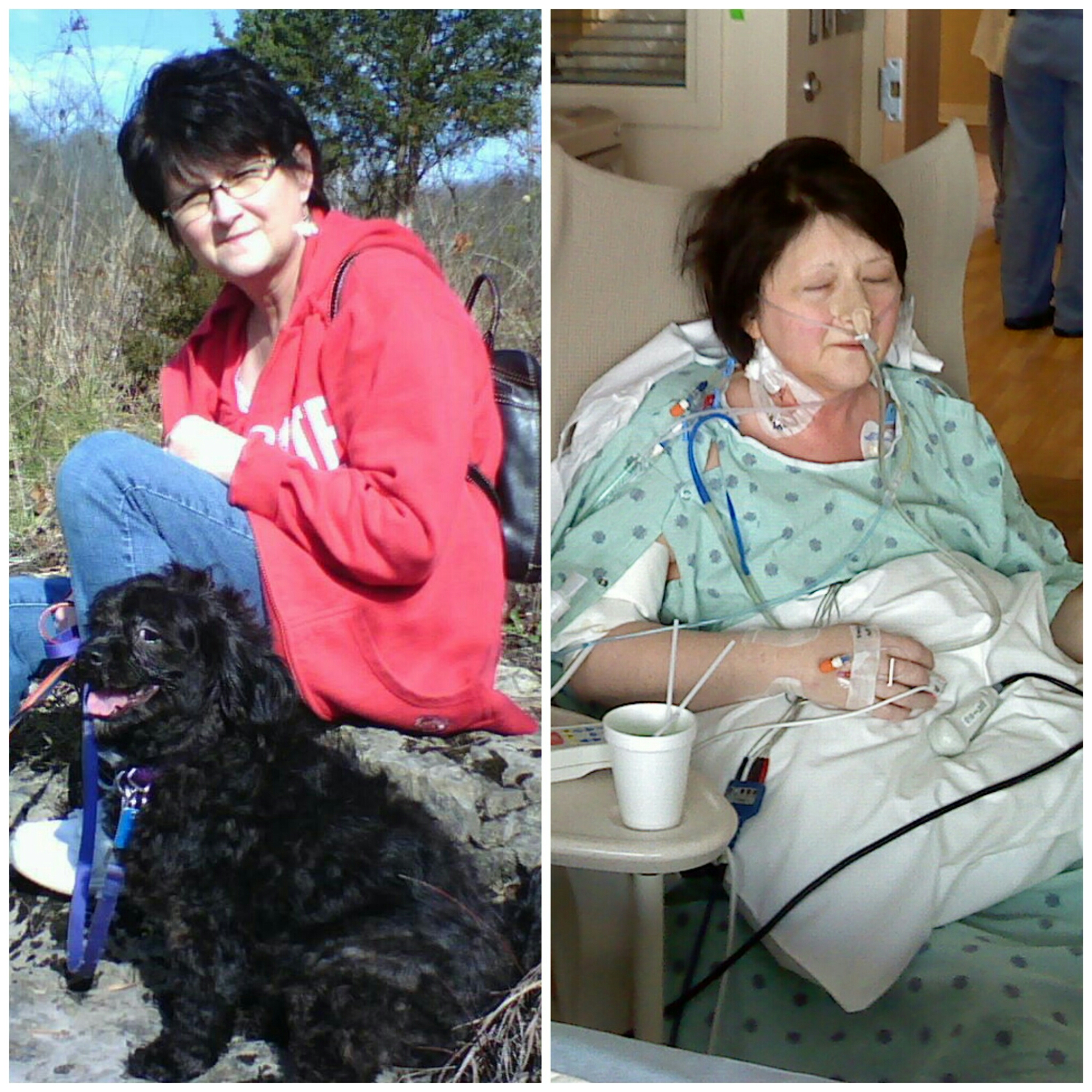
“I don’t remember having this taken,” she said in a somber voice. I leaned over to look at the photo she still had between her fingers. It was a photo of her at the hospital two years ago after a major surgery called a Whipple Procedure. She looked at me as if to question if she was really the one in the photograph.

“That’s you,” I assured her. “You looked awful,” I said, trying to hold back my tears. “I am glad you don’t remember.”

“Me too,” she said as she slid the picture from her fingers into my hand.

I sat and studied the photo for what seemed to be an eternity. She was sitting upright in a chair next to the bed in her hospital room, a pillow draped over her lap. The hospital gown barely covered all that was coming out around her. A tube was coming out of her nose and one was also coming out of her neck. Looking at the photo seemed to leave my mom in some sort of disbelief. She had no recollection of the days following this surgery and although the photo looked like her, she acted as if she had just seen a ghost. I knew it was my mom in the photo, but I too thought she looked like a shell of the woman I have always known. Her pain was so intense after this surgery that I can only describe the look in her eyes as empty pain. It’s the kind of pain that demands complete submission to it. And there she was in a photograph, a momento of pain.

She and I had a haunting glimpse of a time two years ago we would both prefer to forget. It was the first time I seriously doubted whether or not my mom would make it through a surgery. This surgery was different than the ones she’s had previously. This was a rare procedure that required a skilled surgeon and would not guarantee her a better future or survival. When faced with such uncertainty, I thought about the holidays we had shared over the last year and wondered if we had truly enjoyed those moments together. I didn’t want to think about having the next holiday without her. It also made me think about my own selfishness and the times I didn’t grasp what life has been like for her. As long as I can remember my mom has been battling an invisible enemy. My mom was born in 1953 and in 2008 she finally found out what has been causing her life-long pain. She has a hard to detect birth defect called Pancreas Divism (an abnormality of the ducts of the pancreas) and Spincter of Oddi Dysfunction (a dysfunction of the muscle(s) that help control the flow of pancreatic juices). This and the treatment of which caused Chronic Pancreatitis. These abnormalities cause the syptoms she has felt since childhood: pain in the upper right quadrant of the abdomen or in the back, epigastric pain (especially after meals), abdominal swelling, nausea and/or vomiting. All of these symptoms during her lifetime were mistaken for various other ailments, so mom spent 55 years of her life undiagnosed and suffering.

“I’m sorry,” I whispered from under my tears.

“About what?” she asked, sounding surprised.

“For not being more supportive,” I continued. “I can’t imagine what it was like to be in so much pain, especially when so many people stopped believing you.”

“I had to keep going. I knew something was wrong, but I hate that it took so long to find out what it was.”

Her problems began in childhood. She had unexplained pain that grew more intense into adulthood. Because she so desperately sought an answer, she has had a staggering number of surgeries in her lifetime. Some surgeries to fix specific problems and others were an attempt to find the source of the returning pain. There is no doubt it was hard for her to continue to fight for her own health when others had given up.

She hugged me and we sat silently, maybe pondering the moments we lost. Her story has touched me more deeply in the last year. I was recently diagnosed with Rheumatoid Arthritis and I too will most likely be dealing with a lifetime of chronic pain. The difference between her story and mine is defined by one word: diagnosis. When my blood was drawn last year, I didn’t want a diagnosis but once I got it, I was validated. My pain wasn’t an illusion and I could begin treatment. My mom had spent most of her adult life chasing a diagnosis.

So, why was it so hard for her to chase a diagnosis? The hospital and medical bills became a rotating door for my mom even though she and my dad were already struggling financially. Money wasn’t the only reason she was discouraged from returning to the hospital or seeking out another specialist. She’d frequently hear comments like, “If they can’t find anything wrong, then what is it?” or, “You don’t look sick.” And all the while she would feel discouraged and invalidated for her suffering. Years of hearing other’s doubt made her doubt herself and that led to depression.

“How have you done it over the years?” I asked. “How did you live with chronic pain, especially when you had no idea what was wrong? Weren’t you angry?”

“It isn’t easy,” she explained. “Getting angry about it wouldn’t have helped. I knew my body and I did what I had to do. I have also learned not to hide from my depression.”

When my mom finally had diagnosis in hand, the only treatment available was risky and didn’t guarantee a better quality of life. The first procedure landed her in the hospital with acute pancreatitis. I visited her during this acute flare in 2008. Her pain was so intense that she was given large doses of pain medications and food was held until her pancreatic levels decreased. When I saw her, she was out of her head and desperate for food. Every year since 2008 is speckled with memories that she and I would rather forget. Awful memories where my mom and I began having an unspoken understanding about her health and death. These moments would shame the people that would doubt her illness when they’d say, “You don’t look sick,” doubt her pain because she wasn’t constantly folded over from it, or those who were perplexed because they couldn’t see her disability with their eyes.

“Mom,” I said, “you are amazing. I can only hope to have half of your strength.”

“I’m not any stronger or braver than you.”

I heard what she said but doubted the truth in it. I didn’t have the same difficulty before I had my answers. There are many people, like my mom, who are chasing a diagnosis. They spend every day in real pain and desperate for answers. They persevere even if they have to do it alone. My mom did what she knew was right despite adversity. Fighting the unknown is one of the bravest battles one can face. She isn’t the only undiagnosed individual fighting for answers so don’t judge someone based on outside appearances or speculation. Offer support because even when someone is fighting the unknown, they are still fighting.

*d*

image
Why "You don't look sick" isn't a good thing to say.

Signs of acute pancreatitis:

Sudden intense pain in the middle of the upper abdomen and the pain may radiate to the back. This pain may begin 12-24 hours after a large meal.

Fever, nausea, vomiting.

Cammy skin or rapid pulse.

Tenderness or distention of the abdomen.

Signs of chronic pancreatitis:

Abdominal Pain that may radiate to the back or chest that is intense and long lasting. It may be intermittent or persistent.

Stools that are excessively foul or bulky.

Nausea, vomiting or abdominal distention

Weight loss because of malabsorbtion of foods

Development of diabetes if pancreas becomes damaged.

Source: webmd.com

A Brother’s Lesson in Disability

image
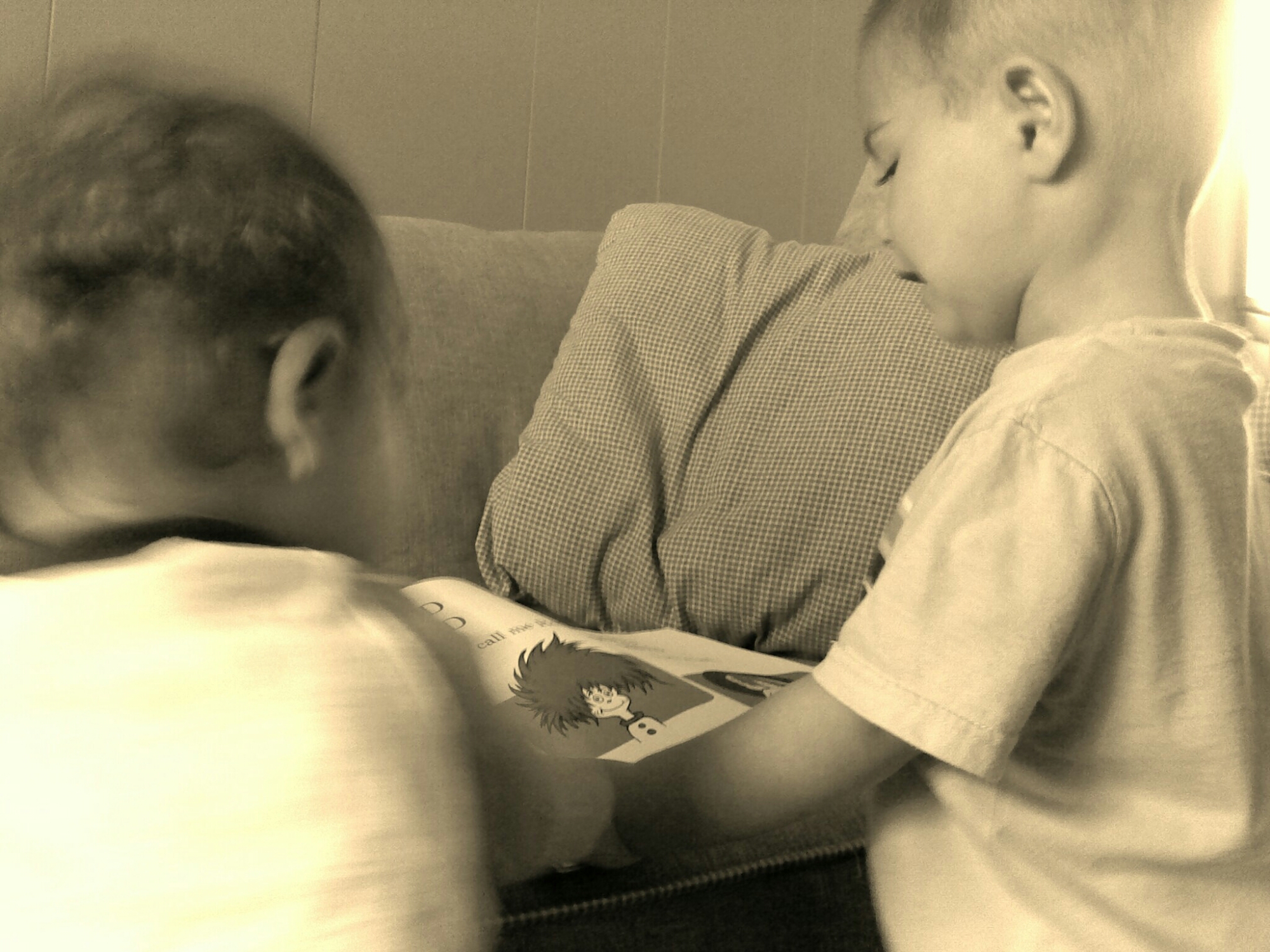
It's hard to believe they were once this little.

My disabled son is seven and he is the second oldest of my four children. My special needs son was diagnosed with Tuberous Sclerosis Complex at three months of age. A few of his secondary diagnoses include epilepsy, autism, and intermittent explosive disorder. He is considered multi-disabled. As he grew, his delays became more apparent to all of us, even to my when my oldest son. He and my youngest son are 17 months apart and it was very exciting for him to have a little brother of his own. It didn’t take long for him to notice that his little brother didn’t play with him as he anticipated, and that his little brother was also sick.

At four months, my youngest son developed a rare and catastrophic form of epilepsy called Infantile Spasms. These deceivingly innocent looking seizures occur in clusters and are very hard to control. He would have multiple episodes a day and the seizures would be only a few seconds apart and could last up to fifteen minutes. All of our best attempts at controlling the spasms eventually failed. This made it hard for him to reach developmental milestones. His brain was just too bombarded with epileptic activity to make any significant developmemtal progress. So as both my boys grew, the developmental gap also grew. My oldest would be playing ball, stacking blocks, or drawing and my youngest could only watch. His body was weak and he had limited mobility. He also had significant speech delays. It was obviously hard for all of us, but especially for his big brother who wanted to play with the “little buddy” he eagerly anticipated. How could I explain to a three year old why his little brother couldn’t play or talk? How could I help him grasp such a complicated subject in a simple way?

My oldest was very familiar with his room. We spent alot of our time playing there. I first asked him where all of his favorite toys were and he happily showed me. Next, I blindfolded him and asked him to bring me those same items. He did find and bring me what I asked but it took him a while and he needed my help. After that and a few laughs, I explained, “Your brother is just like you, he just sees things differently. It may be harder for him but he knows what’s around him, just like you knew your room even with the blindfold on. And just like you had to take your time, he has to take his time to do all the things he would like to do. You needed me to give you directions on where to go and we have to do the same for him. You eventually got to your favorite things and he will too. You are one of your brother’s favorite things and he will find you. Give him time.” I also reminded him that even though our experiment was hard, we still laughed and he needed to laugh with his brother, even when it gets hard. He smiled and I hoped something stuck but every day from then on I still remind him, and all four of my children, of one or all of these things when life gets hard,  give it time, offer help, give lots of love, and never forget to laugh.

*d*

A Ride Called “Disease”

A group of teenagers push wildly through the crowd and down the fair midway. At the tail end of the group, a reluctant girl is holding the hand of a boy sporting a cheesy grin. “Come on,” he pleads as he pulls her hand in the direction of the rides.

“I really don’t want to,” she insists as her steps narrow and her pace slows. Both eventually stop to talk and after a pathetic glance from the boy, she relaxes her shoulders in submission and follows. He spots his friends rough housing in front of the ferris wheel. She protest, “No, I don’t like those things and this one doesn’t look safe.”

“Awww, it’s fine,” he coaxes. She could sense the doubt in his voice.

“Come on!!” the group taunts as she sides her way into line. The ride is old, very old. It has been a right of passage for many other teens. The long held tradition has included rocking, screaming, and bouncing the rickety ride as if to dare it to crumble.

“Don’t move our seat,” she whispered abruptly as they loaded.

“Sure,” he assured as he sheepishly grinned to his buddy in the next seat. Not long after they loaded, the rowdy group began screaming and yelling but they remained still until the last seat was loaded. None took the chance of being kicked of the ride prematurely. After the old ride was started and at full speed, the chaos started. Violent shaking, bouncing, and attempts to stand up over the seat bar began. The operator began shouting but they continued on. The girl held tight to her boyfriend’s arm but his assurance to remain still did not last. He began flipping the seat forward as hard as he could and she began to scream in fear.

“Let me off, I want off now!” she demanded as she drew as far from him as she possibly could. Her trust had been broken.

“We’re just having some fun,” he said as the ride came to an abrupt stop. The operator was now cursing as he began unloading the riders. An argument between the girl and her boyfriend ensued. He offered a half hearted apology only after she began to cry. His remorse lasted until he was reunuted with his group of friends at the base of the ride. Then he sneered and thanked her for embarrassing him in front of his friends. He turned away abruptly and lead the group down the fairway, the girl crying while scurrying behind. In confusion, her focus now became how she could make it up to him.

***

I can definately relate to this story as I was that confused teenage girl years ago. Thank goodness I can laugh about it now and I am thankful that I have matured but that isn’t the point I am trying to make.

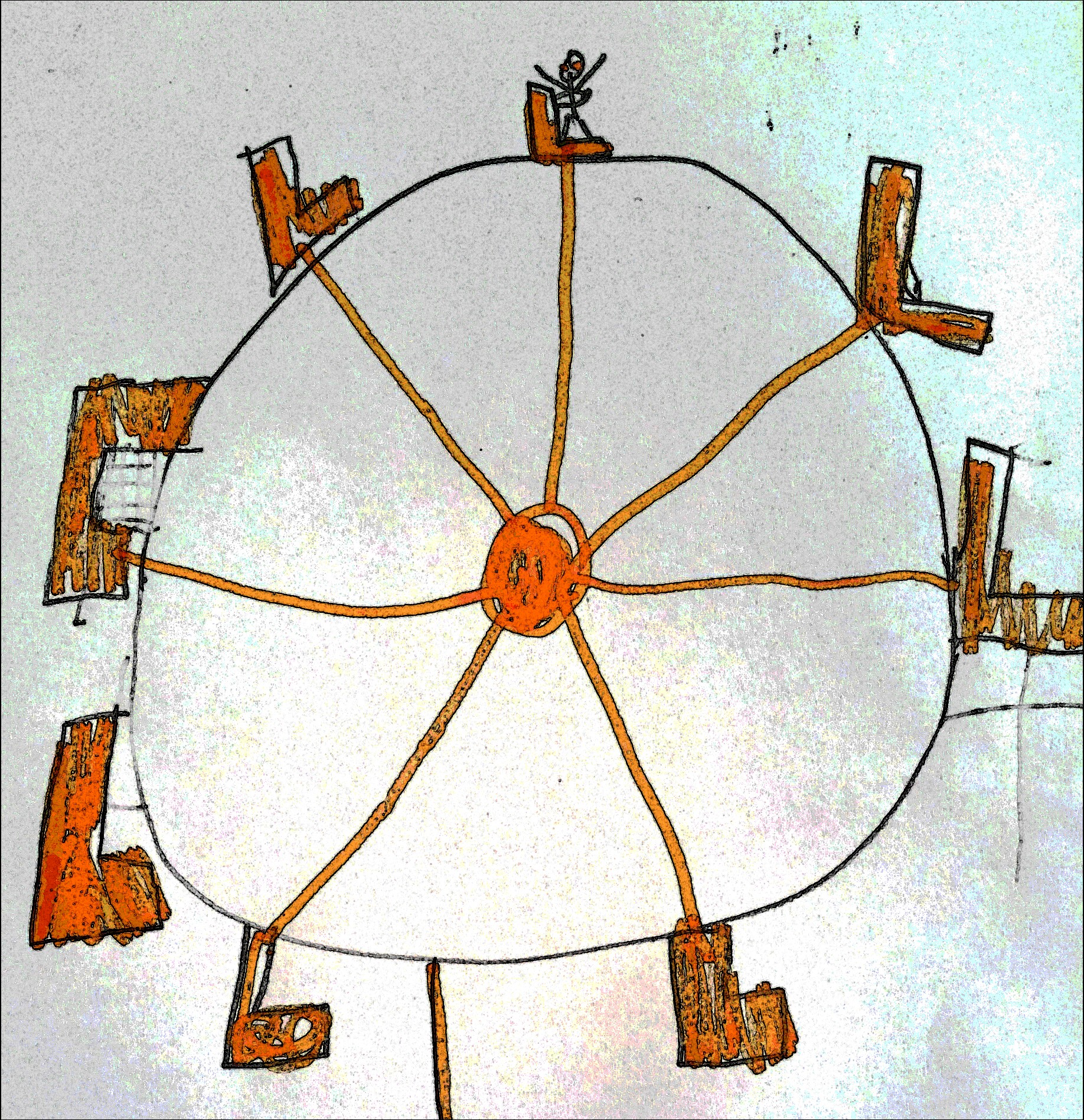
Instead this story is quite the apologue of the last few months of my life. A few months ago, I reluctanly stepped onto a rusty, old ferris wheel. It’s name was “Disease”. Despite it’s unsafe appearance, I convinced myself that I would be okay with “Disease”. Soon I had a passenger and it’s name was fear. I thought I had made peace with “Disease” and I wondered why fear had joined me.

“It’s okay, sit with me,” fear assured, “I’m a friend.”

“Disease” creaked and groaned but I didn’t get too nervous. I was familiar with the ride and I knew a few of the other reluctant riders. Then when the chaos broke out, I pulled myself closer to fear. “That’s right,” fear hissed as it violently began flipping my seat forward. I held tight to fear as the violent forward motion made me feel as if I were going to fall from my seat. Yet, I felt no comfort and my fears increased tenfold. The high and low of the ride now felt like they were coming too quickly. I was now frozen and with fear. I wanted off the ride, now! 

I began devising my own plan to escape. In the meantime, I tried to find some other way to brace myself safely into the seat. I couldn’t see anything, nor could I move. Something was sabotaging my safety. It was the fear still strapped in beside me. Not only  strapped in, but I was still locking arms with it. I had put all my trust in fear only to be deceived. I felt as betrayed as the girl in my story, but I knew I had to let it go. It was only when I let go that I could clearly see; and when I looked, I saw my son. He was riding alone in another seat. I had forgot about him.

Yet, there he sat looking out alone beyond “Disease”. I was staring at him while he began to make his way to the top. As he approached the top, he began to clap, and yell “Woo hoo!” He was happy and I was puzzled.  He wasn’t focused on the ride, he was focused on the view. He could certainly see the sky, the stars, the entire world from his vantage point.

For the first time, I slowly sat back and decided to try to see “Disease” as my son saw it. As I reached the top as he did shortly before, I was amazed of the view “Disease” gave me. I could see life from a vantage point few others could experience. Once I released fear, I was able to appreciate the view. Without fear, every movemment no longer made me nervous. I remained focused with my head held high. As I looked  I finally “got it” and I won’t soon forget what my little boy taught me about “Disease”. It can change you by fear or change your perspective. Fear wants to destroy and I’d much rather follow his example and keep living despite of fear.

Unlike the example in my story, my happiness didn’t have to be defined by who sat closest to me. My focus needed to be on anything that helped me break free from my own immaturity of the situation. Isn’t it amazing how my little boy helped change my heart and lead by example? “Woo hoo!”

*d*

image

A Boy Fading

It’s the first day of school and he is worried about making friends, finding classes, and navigating a world that is literally closing in on him. You are nervous as you watch him prepare for his day even though you have seen him do it many other times. Your son is different. Your son has an invisible disease that is robbing him of his sight. You have to let him go although you know he is going blind. You won’t wave overzealously to him as he smiles eagerly at the stoop of the school. No, you will hide your fear with a haphazard smile and he will crack a cautious grin and wave to you anxiously. You are not sure if you will experience the happy anticipation of hearing how wonderful his day was because his previous school proved to be a terrible experience. You pray a new year and a new school will be the right decision for you both. The question, “Why?” rings in your ears frequently and today is no exception. You know the answer, it’s because he was born with this genetic condition that is stealing his vision. And then that same sickening feeling wells up from your gut and you try to stop yourself from revisiting the same internal battle that steals your sleep. You know the conclusion is always the same, life hasn’t been fair.

image

When it comes to children diagnosed with a disability that robs them of any physical or mental capability, it is often hard to see the silver lining. The hard truth remains the same, it isn’t fair. It is unfortunate that in our supposedly accepting society, people often prey upon the weak much like a lion attacks the weakest of a herd. Too many continue to act like animals when encountered with someone who shows the slightest fragility. School should be a safe environment for every child but instead many children are teased, bullied, and excluded based on differences. Parents often have to decide if they want their child to continue an education at a school that is adding unwanted stress to already stressful physical or mental health issues.

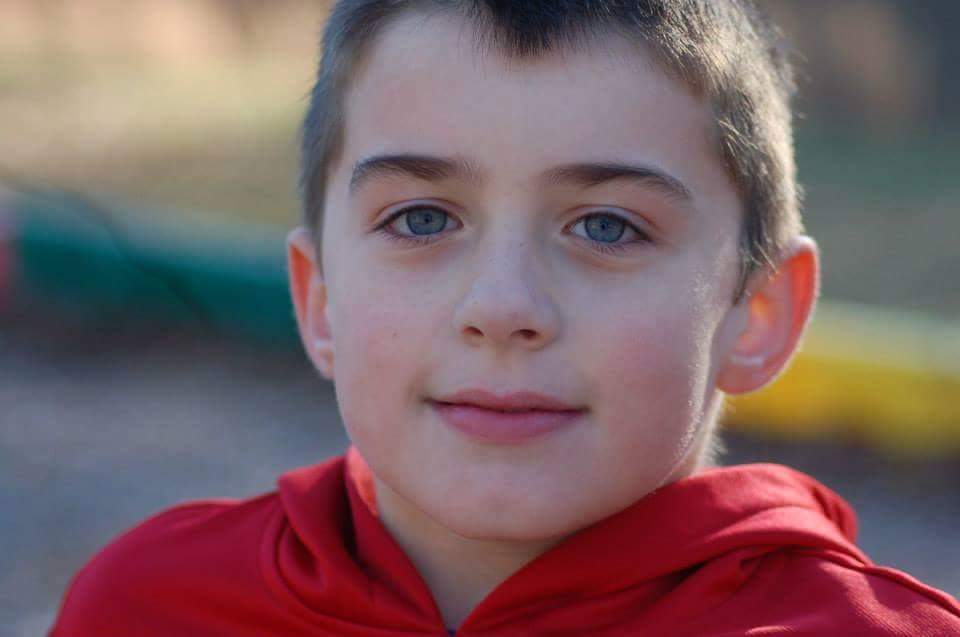
Yet, it happens every day and the above llustration is a very certain reality for a little boy living with a rare genetic disease. His name is Avery, he is 10, and he was born with a condition called Retinis Pigmentosa. This inherited disease causes severe vision impairment by retinal degeneration of the eye. During the course of the disease, the cone and rod (photoreceptor) cells die which causes a decline in vision. The landscape of life for individuals with this disease slowly turns into a confined view of reality. Life that was once bright and colorful slowly turns into a channel of black.

image
Even his favorite things are fading from view.

Avery is as bright and as inquisitive  as any other child his age. Through it all he has tried not to let his disease define him or what he wants to accomplish. But, Avery’s vision is slowly fading and with it, it takes the spirited independence of a little boy. He no longer rides a bike or a scooter because his disease has progressed enough to make these iconic childhood activities risky. At his young age, he now has to be more cautious because even walking into a new environment creates challenges.

image
Sometimes he feels very alone.

And so brings us to Avery’s first day at a new school. He leaves behind students who heckled him for understandable clumsiness associated with his disease, parents who allowed and contributed to the bullying, and impatient teachers. He now has to familiarize himself with a new school, make new friends, navigate a completely different environment, just because he was born with an incurable disease. That is when unfairness is caused by the actions of those who made him to feel unwanted over no fault of his own. Disease and disability are never an elected decision of life, but the unfair treatment makes it seem that way. Teach your children about acceptance. Teach them to love one another regardless of differences. Even a child can be a bright light, and they too can make a difference in someone else’s life. And yes, a bright light for a child whose world is growing dark.

image
Avery with his brothers.

If you wish to support this little boy and his family’s difficulty paying for his medical care, please visit their page:
http://www.gofundme.com/uqm3u7f3u

*d*