It’s warm today and she’s resting on her beach chair. The sun warms her face as she quietly hums the song coming from her headphones. The beach is noisy today but she’s trying hard on focus on this relaxing moment. She concentrates on the cool air that wisps across her toes and despite the noise, she drifts slowly off to sleep.
“We’re done,” cuts in a voice that interrupts her music and startles her awake.
“Thank goodness,” she sighs as she begins to move forward and out of the M.R.I. machine. Her daydream was over. She felt fortunate to have drawn her focus away from that confined and noisy space. But a feeling of disappointment came over her. She wished her moment away wasn’t just a dream. In fact, the last few months for her have been like living in a nightmare.
A few months ago she began to feel sick. She was tired, her body ached, and she felt like she was coming down with the flu. She took a couple days off work and when it was time to return, she still didn’t feel better. The weekend passed and she still couldn’t shake what she thought was the flu or some sort of virus. She returned to work and held strong, hoping her symptoms would improve, but they never did. The symptoms and the addition of widespread pain was beginning to disrupt her life. She couldn’t concentrate at work and by the time she got home, the extreme fatigue and pain kept her from keeping up with her normal responsibilities at home. Deep in her heart she knew something wasn’t right.
It began to slide into every aspect of her life and she knew she needed answers. She was disappointed to learn that when she went looking for answers, she’d only end up with more questions.
“So, what’s wrong with you?” she would be asked.
“I don’t know.”
“What do you mean you don’t know? Didn’t you just have an M.R.I.?”
“I did but they couldn’t find anything,” she said feeling defeated.
“All that money spent for nothing?” Her heart sank hearing those words. She had hoped others would see her quality of life would be worth the investment.
The time and money she invested in searching for an answer was only feeding her increasing guilt, but she kept reminding herself of why she was searching. She often had to keep going even when she felt like the doctors had also given up.
“The doctor gave up on me when I didn’t fit the diagnosis he had in mind, please don’t give up on me too.”
No one wants a diagnosis, but everyone deserves a chance for treatment and hope for a better quality of life. Those living in the gray area between health and a diagnosis are lost. They are always searching, researching, and asking questions. They are often submitting themselves to tests and seeing various specialist when they know the financial strain and time consumption involved. They are not crazy, their symptoms are not in their head, and yes, they are suffering. They are like Erin in my story. She is an intellegent, loving mother of two who works for a living. She is active in the lives of her children, but she also knows something with her health isn’t right.
The woman in the story could be my own mom who searched for 55 years before receiving a diagnosis. She could have been me. I knew something wasn’t right with my own health for over ten years. After various doctor’s appointments and all of the same tests and questions, I found my own diagnosis after plenty of research. My diagnosis finally came after I asked my physician, “Could you please test my blood for Rheumatoid Arthritis?”
People seaching for a diagnosis want you to know:
I am suffering.
I do need answers.
I need support and understanding.
I need help.
Do not judge me.
Don’t ask me questions about my search and then cut me down.
Please don’t offer alternative healing until I have a diagnosis.
Don’t tell me it’s all in my head.
Listen to me.
As for Erin, she is going to keep searching because she needs answers so she can have hope for a better future, for herself and for her children. She desperatly desires the chance to experience life without the disruptive symptoms attached to an unknown diagnosis. She deserves to get up each day and know what she’s facing. She deserves a chance for a fair fight. She and all people living in the gray zone of the undiagnosed want and deserve the same.
We sat on her family room couch sorting through her photos. Occasionally one of us would stop and show the other a photo, laughing or reminiscing about the story behind it. I felt like a kid again, sitting in my childhood home reliving old and happy memories with my mom. Then she paused, her fingers resting on a photo. The smile had vanished from her face. “What? What is it?” I asked. I noticed her demeanor had changed.
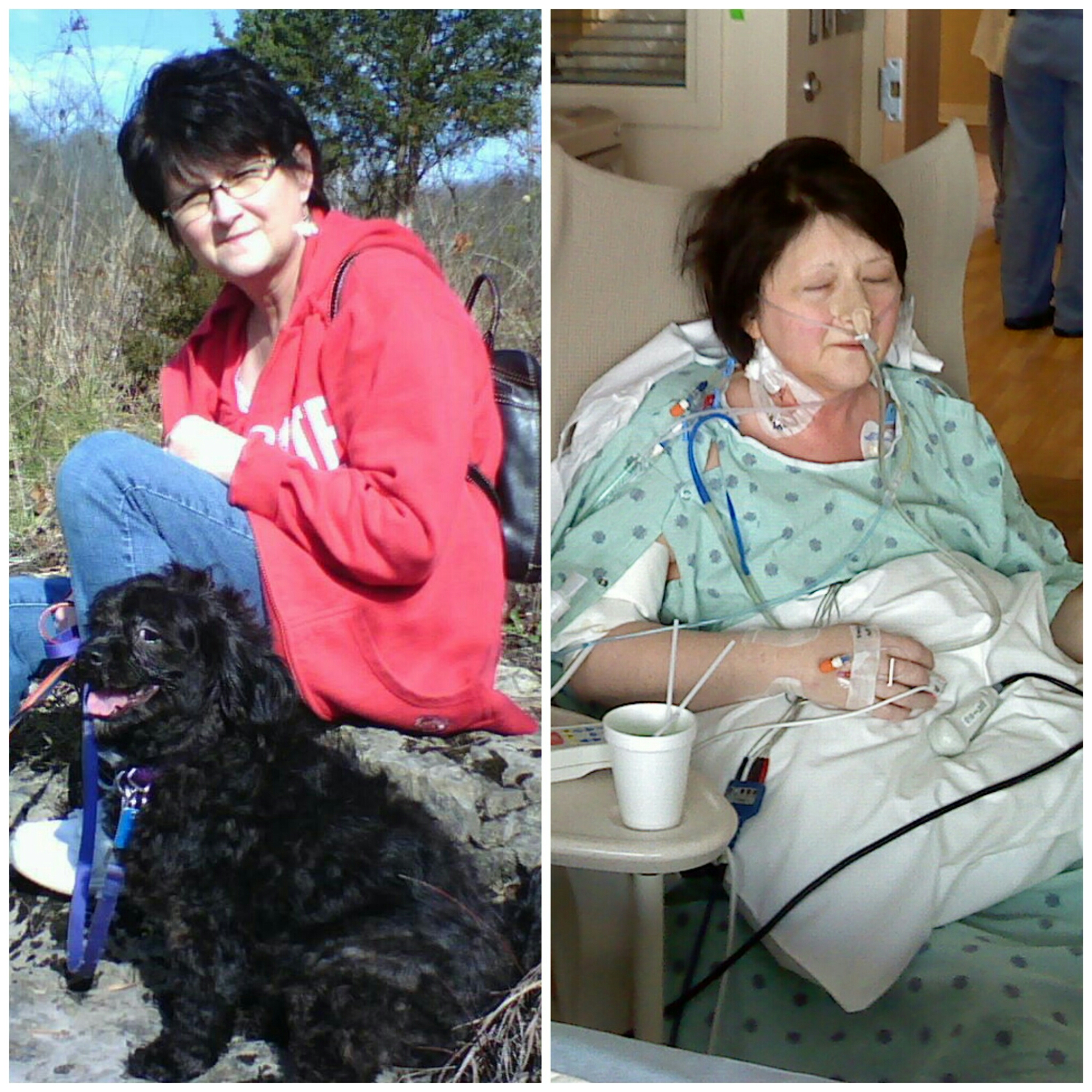
“I don’t remember having this taken,” she said in a somber voice. I leaned over to look at the photo she still had between her fingers. It was a photo of her at the hospital two years ago after a major surgery called a Whipple Procedure. She looked at me as if to question if she was really the one in the photograph.
“That’s you,” I assured her. “You looked awful,” I said, trying to hold back my tears. “I am glad you don’t remember.”
“Me too,” she said as she slid the picture from her fingers into my hand.
I sat and studied the photo for what seemed to be an eternity. She was sitting upright in a chair next to the bed in her hospital room, a pillow draped over her lap. The hospital gown barely covered all that was coming out around her. A tube was coming out of her nose and one was also coming out of her neck. Looking at the photo seemed to leave my mom in some sort of disbelief. She had no recollection of the days following this surgery and although the photo looked like her, she acted as if she had just seen a ghost. I knew it was my mom in the photo, but I too thought she looked like a shell of the woman I have always known. Her pain was so intense after this surgery that I can only describe the look in her eyes as empty pain. It’s the kind of pain that demands complete submission to it. And there she was in a photograph, a momento of pain.
She and I had a haunting glimpse of a time two years ago we would both prefer to forget. It was the first time I seriously doubted whether or not my mom would make it through a surgery. This surgery was different than the ones she’s had previously. This was a rare procedure that required a skilled surgeon and would not guarantee her a better future or survival. When faced with such uncertainty, I thought about the holidays we had shared over the last year and wondered if we had truly enjoyed those moments together. I didn’t want to think about having the next holiday without her. It also made me think about my own selfishness and the times I didn’t grasp what life has been like for her. As long as I can remember my mom has been battling an invisible enemy. My mom was born in 1953 and in 2008 she finally found out what has been causing her life-long pain. She has a hard to detect birth defect called Pancreas Divism (an abnormality of the ducts of the pancreas) and Spincter of Oddi Dysfunction (a dysfunction of the muscle(s) that help control the flow of pancreatic juices). This and the treatment of which caused Chronic Pancreatitis. These abnormalities cause the syptoms she has felt since childhood: pain in the upper right quadrant of the abdomen or in the back, epigastric pain (especially after meals), abdominal swelling, nausea and/or vomiting. All of these symptoms during her lifetime were mistaken for various other ailments, so mom spent 55 years of her life undiagnosed and suffering.
“I’m sorry,” I whispered from under my tears.
“About what?” she asked, sounding surprised.
“For not being more supportive,” I continued. “I can’t imagine what it was like to be in so much pain, especially when so many people stopped believing you.”
“I had to keep going. I knew something was wrong, but I hate that it took so long to find out what it was.”
Her problems began in childhood. She had unexplained pain that grew more intense into adulthood. Because she so desperately sought an answer, she has had a staggering number of surgeries in her lifetime. Some surgeries to fix specific problems and others were an attempt to find the source of the returning pain. There is no doubt it was hard for her to continue to fight for her own health when others had given up.
She hugged me and we sat silently, maybe pondering the moments we lost. Her story has touched me more deeply in the last year. I was recently diagnosed with Rheumatoid Arthritis and I too will most likely be dealing with a lifetime of chronic pain. The difference between her story and mine is defined by one word: diagnosis. When my blood was drawn last year, I didn’t want a diagnosis but once I got it, I was validated. My pain wasn’t an illusion and I could begin treatment. My mom had spent most of her adult life chasing a diagnosis.
So, why was it so hard for her to chase a diagnosis? The hospital and medical bills became a rotating door for my mom even though she and my dad were already struggling financially. Money wasn’t the only reason she was discouraged from returning to the hospital or seeking out another specialist. She’d frequently hear comments like, “If they can’t find anything wrong, then what is it?” or, “You don’t look sick.” And all the while she would feel discouraged and invalidated for her suffering. Years of hearing other’s doubt made her doubt herself and that led to depression.
“How have you done it over the years?” I asked. “How did you live with chronic pain, especially when you had no idea what was wrong? Weren’t you angry?”
“It isn’t easy,” she explained. “Getting angry about it wouldn’t have helped. I knew my body and I did what I had to do. I have also learned not to hide from my depression.”
When my mom finally had diagnosis in hand, the only treatment available was risky and didn’t guarantee a better quality of life. The first procedure landed her in the hospital with acute pancreatitis. I visited her during this acute flare in 2008. Her pain was so intense that she was given large doses of pain medications and food was held until her pancreatic levels decreased. When I saw her, she was out of her head and desperate for food. Every year since 2008 is speckled with memories that she and I would rather forget. Awful memories where my mom and I began having an unspoken understanding about her health and death. These moments would shame the people that would doubt her illness when they’d say, “You don’t look sick,” doubt her pain because she wasn’t constantly folded over from it, or those who were perplexed because they couldn’t see her disability with their eyes.
“Mom,” I said, “you are amazing. I can only hope to have half of your strength.”
“I’m not any stronger or braver than you.”
I heard what she said but doubted the truth in it. I didn’t have the same difficulty before I had my answers. There are many people, like my mom, who are chasing a diagnosis. They spend every day in real pain and desperate for answers. They persevere even if they have to do it alone. My mom did what she knew was right despite adversity. Fighting the unknown is one of the bravest battles one can face. She isn’t the only undiagnosed individual fighting for answers so don’t judge someone based on outside appearances or speculation. Offer support because even when someone is fighting the unknown, they are still fighting.
*d*
Why "You don't look sick" isn't a good thing to say.
Signs of acute pancreatitis:
Sudden intense pain in the middle of the upper abdomen and the pain may radiate to the back. This pain may begin 12-24 hours after a large meal.
Fever, nausea, vomiting.
Cammy skin or rapid pulse.
Tenderness or distention of the abdomen.
Signs of chronic pancreatitis:
Abdominal Pain that may radiate to the back or chest that is intense and long lasting. It may be intermittent or persistent.
Stools that are excessively foul or bulky.
Nausea, vomiting or abdominal distention
Weight loss because of malabsorbtion of foods
Development of diabetes if pancreas becomes damaged.
It’s the first day of school and he is worried about making friends, finding classes, and navigating a world that is literally closing in on him. You are nervous as you watch him prepare for his day even though you have seen him do it many other times. Your son is different. Your son has an invisible disease that is robbing him of his sight. You have to let him go although you know he is going blind. You won’t wave overzealously to him as he smiles eagerly at the stoop of the school. No, you will hide your fear with a haphazard smile and he will crack a cautious grin and wave to you anxiously. You are not sure if you will experience the happy anticipation of hearing how wonderful his day was because his previous school proved to be a terrible experience. You pray a new year and a new school will be the right decision for you both. The question, “Why?” rings in your ears frequently and today is no exception. You know the answer, it’s because he was born with this genetic condition that is stealing his vision. And then that same sickening feeling wells up from your gut and you try to stop yourself from revisiting the same internal battle that steals your sleep. You know the conclusion is always the same, life hasn’t been fair.
When it comes to children diagnosed with a disability that robs them of any physical or mental capability, it is often hard to see the silver lining. The hard truth remains the same, it isn’t fair. It is unfortunate that in our supposedly accepting society, people often prey upon the weak much like a lion attacks the weakest of a herd. Too many continue to act like animals when encountered with someone who shows the slightest fragility. School should be a safe environment for every child but instead many children are teased, bullied, and excluded based on differences. Parents often have to decide if they want their child to continue an education at a school that is adding unwanted stress to already stressful physical or mental health issues.
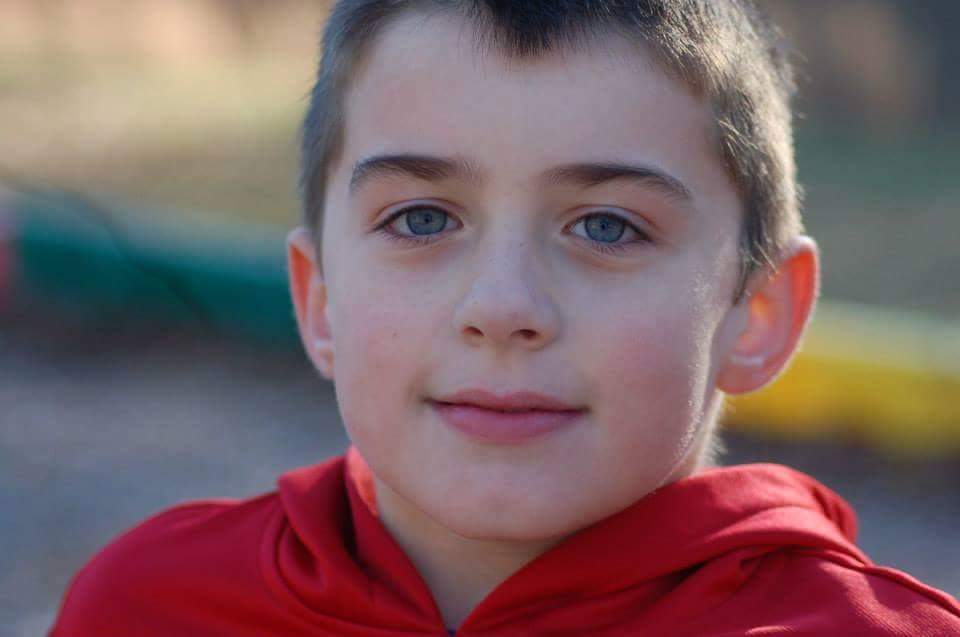
Yet, it happens every day and the above llustration is a very certain reality for a little boy living with a rare genetic disease. His name is Avery, he is 10, and he was born with a condition called Retinis Pigmentosa. This inherited disease causes severe vision impairment by retinal degeneration of the eye. During the course of the disease, the cone and rod (photoreceptor) cells die which causes a decline in vision. The landscape of life for individuals with this disease slowly turns into a confined view of reality. Life that was once bright and colorful slowly turns into a channel of black.
Even his favorite things are fading from view.
Avery is as bright and as inquisitive as any other child his age. Through it all he has tried not to let his disease define him or what he wants to accomplish. But, Avery’s vision is slowly fading and with it, it takes the spirited independence of a little boy. He no longer rides a bike or a scooter because his disease has progressed enough to make these iconic childhood activities risky. At his young age, he now has to be more cautious because even walking into a new environment creates challenges.
Sometimes he feels very alone.
And so brings us to Avery’s first day at a new school. He leaves behind students who heckled him for understandable clumsiness associated with his disease, parents who allowed and contributed to the bullying, and impatient teachers. He now has to familiarize himself with a new school, make new friends, navigate a completely different environment, just because he was born with an incurable disease. That is when unfairness is caused by the actions of those who made him to feel unwanted over no fault of his own. Disease and disability are never an elected decision of life, but the unfair treatment makes it seem that way. Teach your children about acceptance. Teach them to love one another regardless of differences. Even a child can be a bright light, and they too can make a difference in someone else’s life. And yes, a bright light for a child whose world is growing dark.
Avery with his brothers.
If you wish to support this little boy and his family’s difficulty paying for his medical care, please visit their page: http://www.gofundme.com/uqm3u7f3u
My middle name is Raine, pronounced just like the precipitation. (My mom’s always been a bra-less, free-thinking, interesting woman, to say the least.) I hated the name when I was a kid—probably until sometime in high school—most likely because it was different. Being different was highly undesirable then. Now, it doesn’t seem to matter. I’ve embraced a great many of my quirks and decided I don’t care what most people think. I understand that a great amount of nastiness in people springs from jealousy and all I feel about that is pity. And the truth is, I don’t remember anyone actually making fun of my middle name. If they found out what it was, I’d get “That’s weird” or “That’s cool” but nothing glaringly negative. It was just the fear of that potentially awful reaction that kept me tight-lipped about my middle moniker.
To this day, when my mom or granny says my first and middle name, there’s a notable southern twang. It’s like it was built into the two-word phrase. My granny was born and raised in Kentucky and for a time, my mom worked there on the horse farms. It’s where the father I’ve never met lived. Where he probably does still.
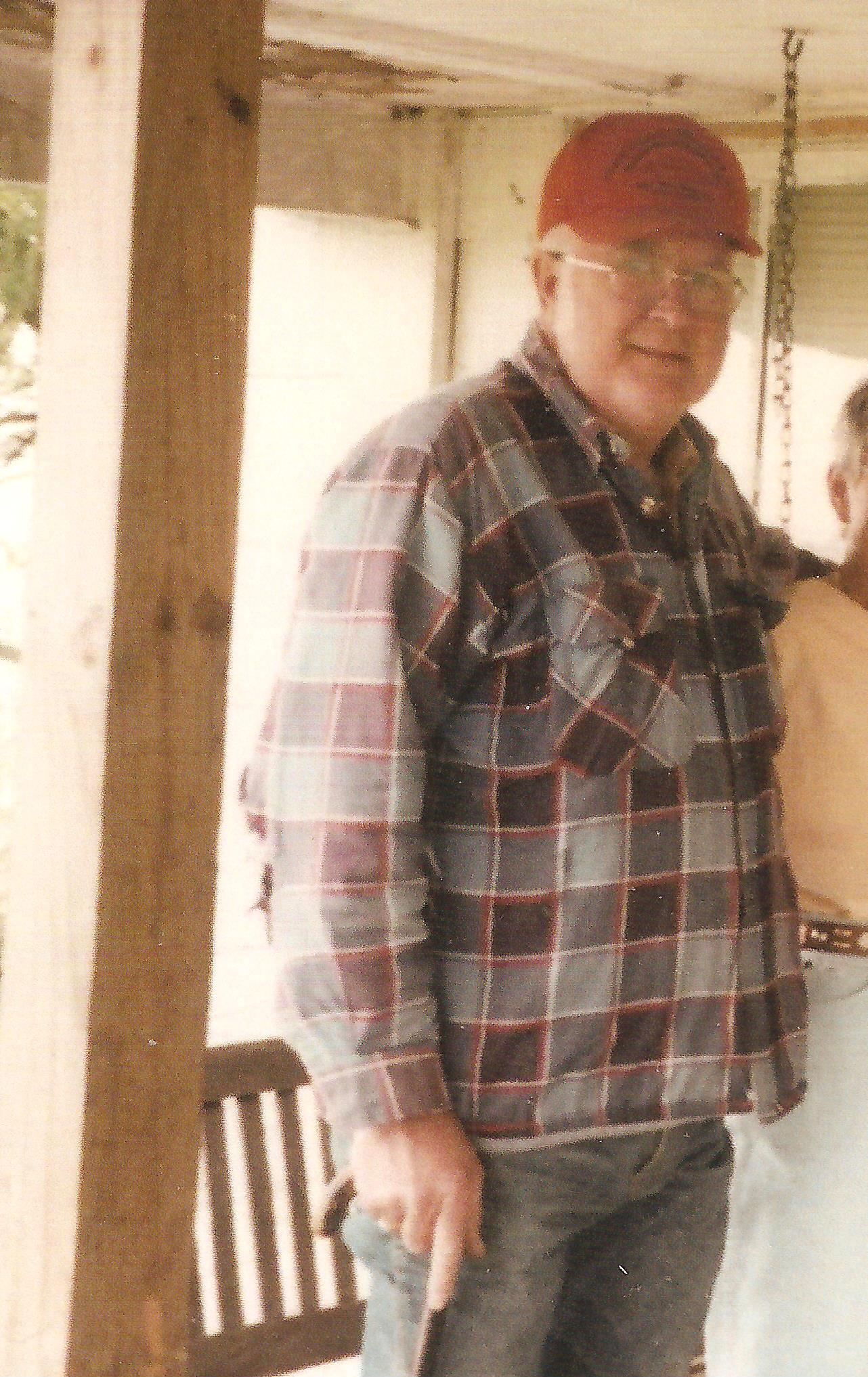
When I was in elementary school, I remember visiting “down home,” the farmhouse Granny grew up in and where her brother Fred, or Uncle Heavy, as I knew him, still lived. I will always remember the lack of an indoor toilet more than anything. And the fear of sitting over that black hole in the spider infested privy. Now, my memories of him are kind of hazy but one thing that I remember in detail was the way he liked to tease me. I’m sure he picked on me about lots of stuff but what I really held onto was the way he called me Thunderstorm. Lindsey Thunderstorm, instead of Lindsey Raine. I remember constantly correcting him, getting more and more frustrated when he refused to listen. I can hear the growls and indignant retorts now. Even then I was a hothead. Maybe he saw that in me. Maybe he was just trying to get a rise out of me. I’ll never know since he passed away before I was old enough to wonder about it.
Uncle Heavy
What he couldn’t have known was just how stormy I’d end up. Along with some unfounded rage issues, I fight depression. It’s hard to pinpoint when the clouds of this invisible, torturous illness moved into my life but when I think back, I’m inclined to believe it was around puberty. Something changed chemically. A switch was flipped. Couple that with the already tumultuous experience of being a teenager and you have a recipe for some fantastic highs countered with incomprehensible lows.
I was angry. I was sad. I lashed out. I earned another name I didn’t care for. Bitch. The worst part was, I, as well as everyone around me, didn’t see what was happening. I knew I was miserable but I didn’t know why. In the beginning, Mom liked to attribute my moodiness to the birth control injection I’d opted to get as a 15-year-old instead of the pill. That very well helped elevate my misery—as well as my weight, which did nothing to improve my mood.
After my junior year in high school, I dumped the goofy, ponytail-having-boyfriend and switched to the pill for contraception. I felt like a different person, for a while. The clouds never fully parted. It felt like the darkness was always there but as my hormones leveled out, I learned to hide it. More than Geometry, Algebra, or English, I mastered the art of acting. I learned quickly that no one understood why I might feel gloomy and introspective. So, I hid it. But not for long. The driving rain from the storm raging in my head shoved me farther and farther into the darkness.
All I really remember about my senior year was prom, being inducted into the National Honor Society, graduating, and the weight in my heart, the blackness seeping into every corner of my mind. And one other moment. I wore a perpetual frown and often put my head down on my desk in school. “Whatever” had become my go-to response. The once interested participant in class was obviously gone, traded-in for a heavy-sighing, eye-rolling lump. If anyone noticed, no one said anything. No one except my college-prep English teacher. I’d always really liked her, having her my sophomore year as well. She supported my writing and love of books and was a generally fun person to learn from. Senior year that changed. At one point, our CP class had seventeen different projects/assignments we were working on simultaneously. I understand that she was trying to prepare us for college, hence the “college prep” course. But when I learned that the general English students were playing board games during their class time, I was disgusted. I was already struggling to get out of bed every day and her harping and piling on the tasks was enough to make me hate her. My loathing didn’t go unnoticed, even if my depression did. After a particularly snarky reply to some question she asked me, she followed up with: “Why are you being such a bitch?” In front of the whole class. All I could do is shrug and collapse in on myself, staring at my desk.
I know I deserved it. My attitude was terrible. For years after that, I didn’t like her. I eventually forgave her, like I’ve forgiven and continue to forgive those that don’t understand.
At some point during my last year of high school, my mom, having a Bachelor’s in Psychology and a keen perceptiveness, had finally taken me to the doctor, being the only person who realized I might have a problem beyond being a moody teenager. Though I remember very little about the actual appointment—I went kicking and screaming—I know nothing was prescribed. The magic number for receiving anti-depressants is 18. I graduated at 17. When I returned to the doctor in August after my birthday, I was placed on Zoloft. To this day, I find it ridiculous that one day as a 17-year-old I couldn’t have the medication, and the next day as an 18-year-old, I could. It might not have been literally overnight, but the difference was mere months. I suffered through my entire senior year with no help, medically or otherwise. It’s upsetting to think about it now and to realize someone else is probably facing the same thing.
I’d like to say that things got better after high school, that I grew out of the funk so many people assumed I was in. But I’d be lying. And though I’ve gotten so good at lying about how I really am, what I’m really feeling, I’m tired. It’s exhausting pretending you’re fine because trying to explain the pain inside to most people is impossible.
I’ve spent the years since graduation in varying states of depression and on multiple medicines. I’ve hated the detached feeling most of them cause and on several occasions, I’ve stopped taking them. While on them, it’s easy to feel like I’m fine, that I can handle my mentality. But every time I walk away from them, the darkness eventually overpowers me. It’s made it clear that it will never go away.
Now, I feel like I’ve come full circle as I’m back on Zoloft. After a roller-coaster ride of deep sadness, numbed passiveness, the inability to stop crying and crawl out of bed, sexual dysfunction, and sickening withdrawal symptoms, I’ve come back to the first medication I was put on. It had worked well then, but eventually stopped, prompting me to try something new. My doctor put me back on it since 15 years has passed and my body chemistry is completely different now. It’s also good for someone like me who doesn’t want the glaring side-effects or the extreme emotional deadness that some of the other meds cause. Luckily, it’s working well at a very low dose.
The key word here is “less.” Somethings never go away completely. 😉
The last time I came off of my anti-depressant was terrible. At the time it was a pretty high dose of Effexor. The withdrawal was a delightful medley of dizziness, shaking, and weird flashes in my field of vision. I thought I’d stepped down slowly enough but apparently not.
I was sure I never wanted to go back to the drugs. I was sure I could handle the depression. It was during this time, and the many others where I was trying to be normal, non-drugged, that I had to put on the Academy Award winning performances. No one wants to be around someone who mopes around all the time or has mood swings that would make even a pregnant woman raise an eyebrow. No one wants to hang out with someone who cries all the time. About everything. Broken plans. Being late to an appointment. Watching a Campbell’s soup commercial. So, I would summon all my skills and be someone else.
When Robin Williams killed himself, I’d been off my med for a year and three months. I was struggling. I’ve never actually cried over the loss of a celebrity but the tears welled up in my eyes as I read about his death.
I probably would have cried even if I’d been medicated…
Not just for the beloved actor, so familiar he was like family, but for the man I knew had suffered silently for probably most of his life. My heart broke because I knew why he’d put on the mask. And I also knew why he’d left this life behind him.
Awareness about depression and other metal illnesses is growing, but it still feels like an awkward conversation. It still feels like I need to fake my way through my days and the discomfort of others is apparent when I actually bring up my depression, which isn’t often, for that very reason.
I’m not likely to try to step off of my medicine again. The coming off, the full-force depression that always returns and the going back on, have only gotten more difficult with age. I’m done fighting the fact that I need a pill to chase away the clouds. I realize it doesn’t make me weak any more than a diabetic is weak for needing their insulin.
When I’m on my med, it’s easier, but that doesn’t mean I don’t have moments where the rain clouds begin to gather. The difference is that I can pull out of the growing darkness and make myself refocus. There will always be a part of me that exists in the middle of a drowning downpour but I’ve learned to embrace it, to use it. It’s where my writing comes from—from the deep thoughts and emotional responses. It’s true I’m a more prolific writer when I’m not medicated but needing the medication is something I’ve come to terms with too. I’ve learned that there is no shame in using an umbrella to get through a thunderstorm—that after the rain, there’s often a blue sky.
Let me preface this by saying that I love animals and have grown up with a variety of furry friends from pet mice all the way up to my beloved late Appaloosa horse. Children are also acceptable but I am more likely to hang out with your kid if he’s well-behaved. I don’t think that’s an unreasonable request. I’m not an expert on all these creatures, but time and experience has given me a well-rounded knowledge.
That being said, last week I was dog-sitting for a friend. She’s a tiny black Pomeranian—the dog, not my friend—with a summer haircut the neighborhood kids would definitely make fun of if she were people. The dog has always been overjoyed and clingy with me when I visit my friend so we thought she’d be fine coming to spend a few days with her Aunt ~L~. And she was. I mean, sure she missed her mom, but she mellowed out pretty quickly and was a joy to have. Except for that pesky being-a-dog part.
Does this haircut make my head look huge?
Dogs are needy and very reliant on their people. I know this, and yet, I’m still amazed by the level of dependence. Don’t misunderstand me! Dogs are great! They’re fiercely loyal and forgiving and make great friends. But I’m just not the kind of person who likes adding more time consumption to my day. That’s why I have cats. They’re easy because most of the time, they could care less if I exist or not. I could be on fire and they wouldn’t look away from the sliding glass door to the patio.
Having basically a furry, adorable toddler in the house made me think about something that often bothers me, sometimes to an eye roll, sometimes to a teeth grinding anger.
Though I’m not a dog person, that doesn’t mean I haven’t had years of experience with family pets and the pets of friends. The same goes with kids. In fact, I find myself equating having a dog with having a small child, especially if it’s a puppy. And this brings me to my point. Dogs and kids are great, but they’re most likely NOT for me.
I’ll be 34 in August. I married Husband a little over two years ago. When we got together, the obnoxious question on everyone’s lips was: “When are you gonna get married?” Once we were engaged, it evolved into: “Have you picked a date yet?” And once I marched down that aisle and Flashmobbed my reception hall (seriously, we did, and it was AWEsome), the question became down right personal: “When are you going to have kids?”
Since I was probably 11 or 12, I’ve felt like I never wanted to have kids. Until I got married, I was only slightly aware that all of humanity was expecting me to want to. That seems a little messed up to me. First, I find everyone’s preoccupation with both my vagina’s business and my uterus’s functionality kind of disgusting. And it takes a lot to gross me out. Ask *d*. But if you think about someone asking you when you plan to have children, you realize what they’re really asking is: “When will you and your husband be having sex in order to make a baby?” See? I could get far more descriptive, as I’ve thought about this quite a bit, but I won’t. Second, it makes me angry when someone hears my answer: “I don’t want kids,” and insists that I do, in fact want them. That it’ll be different when it’s your own kid. I am under no delusions that it won’t be different. Of course it will. I’m not a mother but I’m also not an IDIOT. What really makes my jaw clench (and causes heavy use of italics in my blogs) is the idea that other people feel like they know what I want and insinuate that they also know my body, mentality, and personal preferences better than I do. STOP. IT.
I know myself very well. That’s the beauty of waiting to get married until after I turned 30. I’ve had those 30 + years to get to know just what I can and can’t stand, what I like to do, and where I want to go. The decision to remain child-free is not something I take lightly. In fact, I still mull it over at least weekly. It’s like I’m checking my stats and seeing if this is the week I will change my mind (SPOILER ALERT: IT ISN’T). But I do think about it. I don’t think about it because I’m hounded by so many people (even those close to me who should know better), but because there is part of me that would like to have someone to teach all the things I’ve learned on this speed-bump riddled road of life. I don’t doubt my capabilities to love unconditionally and sacrifice as a mother should. But I also understand that I like the way my life is and that I am selfish and wish to stay that way. At least when it comes to devoting time to a kid. Hell, I don’t even want a dog. I’m not going to do what everyone expects when I know it’s not right for me.
If my plan changes in the near future (‘cause let’s face it, it would have to happen soon since I ain’t getting’ any younger), it will have nothing to do with the harping and nagging of others who harp and nag even though it’s not their bodies or lives that will be altered.
How offended would you be if you had children and I told you shouldn’t?
There have been plenty of times when I have wished I could be someone else. This usually happens when the “envy monster” whispers in my ear, “Look who has it better than you,” or “They have it all!” and I get the feeling in the pit of my stomach that groans about how life has been unfair to me. It’s hard when I hear when these same people have purchased a new car or won the lottery and the only “lottery” I feel we have won is that of incurable and obscure diseases. While other parents think about vacations, taking kids to practice, and play dates, we may never afford future vacations, I am often debilitated due to my Rheumatoid Arthritis, and I have to consider my son’s medical and behavioral issues if the rare opportunity for a play date arises. I think about illnesses every day. It is consuming and it eats away at my me. Bit by bit, the worry, guilt, and fatigue has at times compiled into depression. It would seem happiness is far fetched on the uphill battle we often face, but it isn’t. I can affirm that I have experienced envy, guilt, anxiety, depression, and sadness at the hands of multiple diseases. They have robbed me of sleep, peace of mind, and the luxury of quick decisions. Everything in our life has to be carefully thought out and planned. Life is lived one day at a time and we are sometimes barely getting through the day. So why am I so happy?
For one, I live by faith and believe my life has a greater purpose. I believe I have learned to be a better person through all of my suffering. Suffering is inevitable and to many, suffering is pointless but I dare you to consider the contrary. I have had a better look at the lives of others who have suffered around me by experiencing the same. I was ignorant and there was so much I didn’t understand until I also had to experience my life at it’s lowest. It was from the bottom where I could appreciate the strength of people who were experiencing great difficulty. It was also there where I became more aware of my weaknesses and failures and desired to be a better person. I learned how to find strength and happiness in the face of adversity.
It sounds simple but I no longer hold myself to an unrealistic standard. I allow myself to feel envy, sadness, and heartache and it doesn’t make me a bad person. Too often, I feel like I have to live up to some ridiculous, unspoken standard that says I have to be happy, or at least pretend to be happy all the time. I don’t. Life has been unfair, other people do seem have it better, and there are numerous health issues in my family. The pain is real so shouldn’t the acknowledgement of my own feelings also be real? Once I decided this, I also stopped sugar-coating my response to the question, “How are you?” I give an honest answer and if someone didn’t really want to know, they will not likely ask again. When did it become necessary to omit difficulty out of normal conversation? Difficulty is a part of life. Why should I feel guilty about talking honestly about my life?
I have also put unnecessary guilt to rest. I have spent too much time feeling guilty about things I could not prevent or did not cause. Guilt by its own definition should only be felt when one purposefully does something in contrary to what he or she knows is right. Trying my best is not something I should feel guilty about. Life should not be based on hypothetical scenarios that can’t changed. What’s the point? I also stopped feeling guilty about what I could not do. If life demands that I leave the laundry pile up and the house remain dirty, so be it. My house and my laundry will wait for another day.
On that note, I stopped telling myself that I had to maintain the perfect image. I made myself crazy cleaning house, painting walls, and making everything around me look perfect when I was falling apart on the inside. Yes, sometimes having other areas of my life in order helps me feel better but it should never take priority over my own or the children’s needs.
Lastly, I remind myself that everyone is struggling with something, even those people I envy and people like me who try to maintain that perfect appearance on the outside. Honesty can be very freeing. I appreciate those who are also honest when I ask, “How are you doing?” It helps to know I’m not walking the difficult road alone.
A few events today had me thinking about the following post. I had originally posted this on my personal Facebook page and I thought I would share it here. I haven’t been a special needs parent for very long but it has certainly changed me in a short period of time.
1: Patience is needed and taught on a daily basis.
2: “Slow to anger” is an important saying that does wonders when practiced.
3: Someone should never be judged based on their disease and/or disability.
4: Never judge someone if you are not coping with their problems.
5: Treat others the way you want to be treated.
6: Whispers, stares, and gossiping about a situation that can’t be helped, hurts.
7: Difficulty teaches compassion.
8: We want to help but are often hindered by our circumstances.
9: Guilt is a part of every day life.
10: Depression is real and is felt a lot more often than we want to admit.
11: Help is not requested as often as it’s needed. It seems important for others to think we aren’t falling apart.
12: We stay at home and shy away from gatherings if we know it will cause stress all around.
13: Choosing a baby-sitter is a big deal, thus we don’t go away as often as we would like.
14: We appreciate the opinions of others but rarely take advice from those who spend very little time with our child.
15: We need and love support, support, support.
16: We rarely want sympathy. We just want someone to talk to. It helps us unload some of our burden.
17: We want to know about your family and notice when you stop reaching out to ours. We realize our life seems depressing, but it is ours.
18: Our hearts break a little when we see others doing things we know we may never be able to do.
19: Negative people and opinions hurt, we are doing the best we can.
20: Love reaches deeper than we ever expected.
21: What seems like a burden to others, is a blessing to us.
22: We are sad when others refuse to see the joy our children bring to our lives.
23: We have seen more compassion and love from others through our difficulty than we ever expected and it’s humbling.
24: Celebrate the little things.
25: Choose the battles that really count.
26: We worry about losing our spouse profoundly more than other people. We know how difficult it would be to raise our children alone.
27: We no longer measure great achievements by the world’s standards.
28: Some of the best friendships we have made are forged through a common bond.
29: With each struggle we become stronger.
30: Our journey has helped us love the differences we see in others.
If given the choice, we would not choose a disease or disability for ourselves or for our children but we have been blessed by the difficulty it has brought us. We know what it means to make every day count and we understand why each day must be appreciated.






 CrossRoadTrippers