Beauty in a Different Wrapper

We sat alone and waited for the neurologist. “My son has a neurologist,” I thought, “how did this happen?” We stared at the computer sitting on a long table. Shortly we’d be able to see what was causing our baby’s seizures. It was like waiting to unveil and unknown enemy. The neurologist would soon come in, press a few buttons on that computer, and show us what was so different about our little boy. He had a number of different tests over the two days we had been at the hospital but only the M.R.I. would allow us to actually look at what this Tuberous Sclerosis Complex was doing to our baby. The name was foreign to us but yet it was suddenly going to be a part of our lives. A mere three days ago we had a normal little boy but now we had that little boy plus a rare disease unknown to us and most of the hospital staff.

We spent several hours on the phone trying to explain what our little boy had and what it meant for his future but we only managed to muddle through the numerous conversations with family and friends. Whatever this Tuberous Sclerosis was, I hated it and I wanted no part of what it was doing to my son.

My husband and I looked at each other. We gave one another the same look; the look that asks, “What are we going to do?” I am sure I had just as much desperation in my eyes as I saw in his. We felt defeated, broken, and very much alone.

It was in those moments after receiving that terrible news that our life seemed to stop so abruptly. It stopped, we stopped, and for the first time, we had no clue as to where our lives were heading. The addition of this terrible knowledge gave us a heightened awareness of how normal the lives were of those same family and friends we had those muddled conversarions with in those first few hours after we arrived at the hospital. Our normal was gone. I realized everything had changed and life would not go on for us as it once did. We were handed back our life in shambles as it was our turn to get the terrible news. Why did we have to be the ones? Why did our son have to be sick? Things like this don’t happen so close to home, let alone in our home. What was worse was the terrible feeling of isolation. No matter who called us, hugged us, or offered comfort, no one could stand in and take our pain. The gnawing yearning to find someone, anyone who would intimately understand our pain was overwhelming. We didn’t want to feel so….. alone…..

Last year I had an idea, I wanted to start a blog. At first, I really didn’t want to share it with the world. I wanted to keep it within a limited reach. My friend and I loved to write and what better way to turn what we love into a little more. Over the years I have wrote a few thought-filled pieces for my Facebook friends updating them on the condition of my son but the response was minimal at best. I thought that maybe I should be the one reaching out to others searching like me.

So we decided we would write. To keep our little blog confidential and comfortable, we began to use just an initial as our names, *d* and ~L~.  This was good for many reasons; we could have the freedom of writing without backlash from hyper-critial people and if we were at the receiving end of negative feedback, they would be cutting down these alternative personas of us, not the actual us, my friend and I could be viewed as equals in our pieces and we would be able to blur the lines of our differences and write cohesively, and hopefully readers could identify with us much easier. We wanted anyone to say, “Yes, I could be *d* or ~L~ and I feel the same way”. A few months after we began our venture, I decided to submit my work and try to reach a little further out into the world. Since my first submission to The Mighty in June, I have twelve pieces on their site and one of those went on to be successfully picked up by Yahoo Health. I am amazed my voice has made it that far. But there is so much more we want to do. There is a definite purpose in our writing, maybe we don’t fully understand what it is, but I know what I would like it to be….. I don’t want anyone to feel as alone as my husband and I did when our son was diagnosed. I want others who feel alone to find a common thread in our writing. The story of my life is a mess but I feel like I need to share it. I want others to know there is hope and happiness in what seems to be the most difficulty.

********

I am often in awe of humanity. It’s easy to get tangled in all the bad news shared on television and social media. It makes me sad when stories highlighting the resilience and goodness of humanity occupy only a few short minutes of our day. We are beautiful creatures. My faith teaches me that we are perfectly designed and created but I also understand that my opinion is as different as we are from each other. Nonetheless, we cannot deny the genuine beauty we all possess. We have and inner strength and beauty that makes us move forward in the face of the most impossible feats and dares us to move even further to explore ourselves. Despite the vast array of our own kind, we hold many unspoken, common bonds. Most of us want commpanionship, we want to feel loved, and we are looking for ways to become better versions of ourselves.

No doubt evil has encroached on the heels of humanity. It tempts us to turn our backs on one another, deprive the needy, and think only of what is good for ourselves. The battle of good and evil will exist long after our generations have passed so that means we have to work that much harder, no matter what you believe, to ensure humanity can continue to shine as a beacon of love and grace.

Finding our purpose isn’t always easy. As a child, we think about what we would like to do when we grow up. When we listen closely to our little ones, a good majority of them want to help others in the future. As we grow we learn and change our opinions of what would be best for us. We also think about if what we want to spend the rest of our lives doing is best for us. We take into consideration finances, schooling, and where we would like to live. But we cannot forget those first thoughts we may have had about our future. The possibilities were endless. Today we may not want to pursue a career in service to others but we can still do great things for each other. These acts may only require a moment of your time but they can impact the world one moment at a time for the good of our future.

I want to write. I want to expose the raw nature of my life and sometimes open myself up to critics to be a voice of hope. While I have come to terms with the very real possibility and reality that I will be at the receiving end of negativity, it all becomes worth it when I have successfully reached across the small screen of my phone to put out my virtual hand to another human being that needs to hear the words, “You are not alone.”

We were not meant to be alone. We were gifted one another. Yes, it’s hard when we are gifted with something that is sometimes difficult to understand or appreciate. Sometimes those gifts aren’t as we imagined but once we take the time to unwrap what we have, we can see the goodness under any wrapping. We sometimes have to tear off shame, guilt, fear, and a common flawed nature to find the treasure inside. We have to take the time to understand that an unexpected gift is sometimes the best gift of all.

Life comes with shocking and truly terrifying moments. These moments can sometimes pull us to the edge more times than we would rather admit but if we are all honest with one another, we would say that our toes have all been dangling over that edge. We have all felt the disparate loneliness that we must face alone. No one else can stand in if and when the word cancer, disability, or death is directed at us. No one else can stand alongside the casket of our precious loved one and receive condolences. There are times when we have to stand alone but that doesn’t mean we have to be alone. We can find comfort when a hand reaches out from across that chasm and a voice says, “I have been there too”.

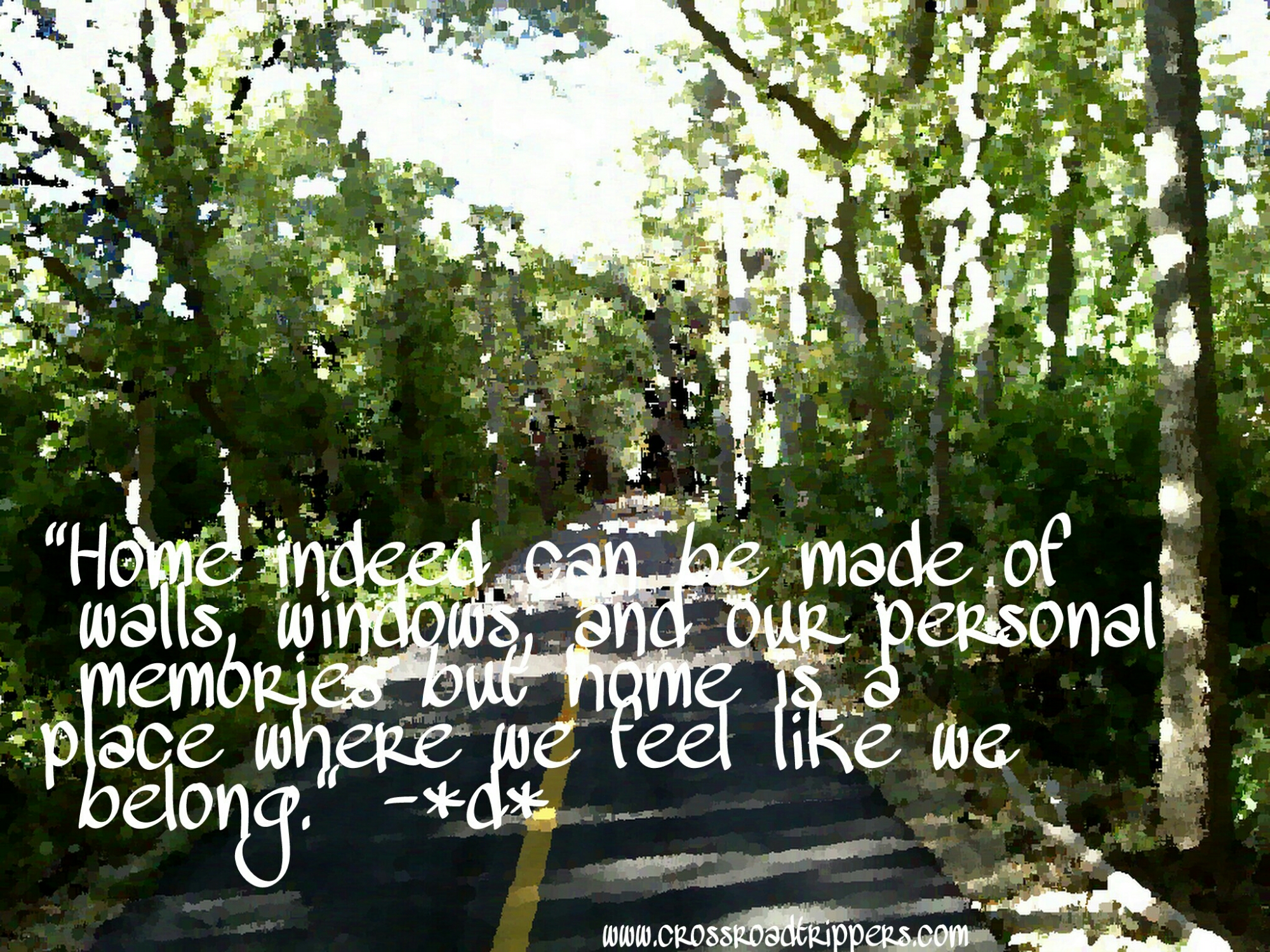
Eventually those voices and hands that reach out to grab us at our most vulnerable moments are those hands that welcome us home. Home indeed can be made of walls, windows, and our personal memories but home is a place where we feel like we belong. I recently had a conversation with my aunt who has struggled most of her life. She, like many people, have felt isolated and alone because she was different. During a recent conversation she said, “For years, all I wanted was my family.” It took years and a lot of heartache but she has found love and acceptance. And she feels like she has a home. She has a place where she is loved beyond the wrapping she had felt was too different to love.

In the reach of our progress, it is sad when there are people who still feel unloved and alone because their wrapping. They are those who identify themselves as “different” or were gifted something precious in a different wrapper. We must not forget, when we are all stripped down to the core of our humanity, we want to be loved, we want to be accepted, and we have fought for a place to belong. So don’t believe the headlines that scream to the masses that life is only for those who come from a predetermined mold. Humanity is for everyone. Life is meant to be cherished and enjoyed and you don’t have to fit a hypothetical criteria to do that.

We learn to grow and truly appreciate what we have when our toes are dangling over the edge. It is then we look back and yearn for that solid ground. Too soon life can change and you may be asked to break the mold. If that time comes, take all the strength of humanity and break it across that divide. Will you help bridge the gap and fill the void with all the wonderful things that make you different and a beautiful part of us all?

*d*
image

A Matter of Perspective

One of the biggest challenges special needs parents face is trying to unravel the complex issues associated with our children. Sometimes it’s asking, “Why won’t he eat?” to “Why is she so anxious during social events?” Parents like my husband and I not only have to deal with issues such as these but we are also trying to understand everything associated with him medically. All these things intertwine like a complex web and pulling at any part of this web will no doubt effect something else.

For example, my one of my son’s diagnoses is epilepsy and when his seizures become poorly controlled, we have to decide the next step in management. Most of the time we choose to increase the dosage of his current medication before trying another medicine or approach. We also know his behavior is directly effected by how much medication he is taking as he has been known to have a low tolerance for anti-epileptics at high doses. This has made finding the right therapy for seizure control challenging. We want control but we also don’t want to see him overly aggressive and causing harm to himself or others.

A few years ago he started a new medication to treat his primary diagnosis, Tuberous Sclerosis Complex (TSC). The medication is normally used to treat cancer but it has been found to be a promising drug to treat TSC. A year after starting this medication, he was seizure free but he also stopped eating. Feeding issues were not new to him but giving up eating was and we became concerned. After asking adults on the same medication, speaking to his clinic and a nutritionist, we have a better understanding of how the medication may be effecting him and a plan to help him get the nutrition he needs, but we still don’t fully understand how to unravel this complex issue. He could be refusing to eat because of his autism, medication, or behavioral issues. We also realize that we could be partly to blame for his finicky eating habits.

These two examples are not the only ones I could list but they are the issues that have caused the most conflict in our lives. It is particularly difficult for us to pull our son apart from his problematic issues and fully understand how to manage them, so trying to explain it to others is almost impossible.

I know my husband and I are not the only parents who are exhausted by the questions and unwanted advice over subjects we are trying to understand ourselves. We started our son in early intervention at four months of age. I have worked with therapist for years discussing his different habits and behavioral issues. We have spoke to his team of doctors, nurses, psychiatrist, nutritionist, and many more to try to give us the best chance of helping him live the fullest life possible. After seven years, there are many questions that we still cannot answer. There are many questions that don’t have answers. I want to share a few insights to what it feels like for special needs parents when conflicts arise over our child’s issues.

1: Unwarranted parenting advice makes us feel like we haven’t done enough for our children.
Although we have spent years with professionals to try to help our child work through various problems, there is no magic fix. There will still be times when he will have a meltdown, inflict harm on himself or others, and many other things we’d rather not see. This does not grant anyone the right to offer advice when it isn’t needed. The truth is, we don’t like seeing our children struggle either. That’s why we have been working very hard to help our children. Don’t forget that they are often struggling in ways we don’t understand. If you haven’t been working just as hard at helping, then stop the unwarranted advice.

2: Dictating to us about what you think our child should or should not do causes unwanted stress.
We have been there. There is a party and all the kids are lined up, ready to play a game and someone says, “Everyone plays, even (insert our child’s name here)”. We have even been told we HAVE to sing The Happy Birthday song to our son even though it causes him anxiety and will set off a meltdown. We do want to help our child test his boundaries but we are also well aware of those boundaries. We certainly don’t appreciate someone else making assumptions about what our child can or will do. If we choose for him not to participate, we have a good reason and if that isn’t good enough, prepare to get what you have asked for, anxiety from our child or a stern “no” from us. Asking before assuming is always the best approach.

3: Pointing out our child’s flaws is very upsetting.
I don’t understand why others feel the need to point out our child’s issues, like we are blind to them. We are obviously aware of these things, it is OUR child. Instead, try acknowledging the good things our child is trying to do.

4: Fixing our child for us undermines our parenting.
Trying to “fix” things, especially without our consent is not welcome. If we don’t offer our child fruit at the dinner table, we don’t want anyone else to either. If our child hasn’t had a haircut for a while, there is probably a reason for it. Don’t try to save the day with these “fixes.” We are not neglecting our child when we choose not to do or offer things that others may feel he needs. Sensory issues are usually behind the anxiety he feels over getting a haircut or being offered a new food (with a new look or texture) so unless you are a expert on sensory or anxiety issues associated with autism, please stop. The best thing to do is ask, “How can I help?”

5:  Ignoring requests associated with our child will indeed causes friction in our relationships.
My late grandfather meant well when he would ask my son if his food was “good” every time my son sat at the table with him. My son’s response to the question was always the same, he’d scream and hit himself. This never stopped my grandfather, he’d keep asking. This caused us a lot of anxiety because even getting our son to the table was an accomplishment. Mealtime is usually the biggest cause of anxiety for our son. It takes a lot of effort to get him to sit at the table for a meal and getting him to eat is an even bigger deal. After all the work involved, it would be undone with the same question from my grandfather, “Is that good?” Ignoring the obvious friction the question caused made mealtime a problem for all of us.
Sometimes an innocent question or action could cause anxiety for our child, so we ask our requests regarding our child be respected. Don’t be the reason for additional stress.

The bottom line is this; we need the support of those around us. We understand it’s hard for those who love our child to feel helpless because they want to help. The truth is, we feel helpless too but we are doing our best despite the fact that we don’t have all the answers. We want to be trusted to know what is best for our children. When we all work together, we have the best chance at helping these wonderful children have a happy future.

*d*

What is Important to Me in the Coming Election

Dear Presidential Candidates,

I would like to be very candid with you about my life because I am a representation of many silent voters who are watching you carefully. I am an American who is living with chronic illness and I am also an American who has a special needs child. It may be rare to have both a debilitating disease and a child with one but here we are and I want share 6 points that are important to me. By the way, I have Rheumatoid Arthritis and my son has Tuberous Sclerosis Complex. Neither disease has a cure so our problems are life long, so we hope for long term solutions to the issues that are important to us.

So, how can my life be important for your champaign?

1: My son collects Social Security Disability Income.
Thus far, I do not. My disease has become more debilitating since my diagnosis and some day I may choose to apply for Social Security Income, but the difficult process is enough to make me steer clear of it for now. Everything I have learned and experienced about social security is difficult. I don’t have to go any farther than my phone to realize how broken our system has become. Don’t get me wrong, I appreciate this vital lifeline but we have developed a love/hate relationship with this program that was supposed to be designed to help children and families like mine.

2: We are directly effected by drug companies charging outrageous prices on medications.
My son was prescribed a medication for a type of catastrophic epilepsy called Infantile Spasms. We saw a huge increase in the price of this medication after FDA approval. He has since started a new specialty medication and because of the price, we are required by insurance to get preapproval every three months. This means I am a sick with worry every three months wondering if they will approve the only medication that has helped my son have an improved quality of life and seizure control. When has it been acceptable business practice to jeopardize lives to make money? The practice of specialty medications being distributed only by speciality pharmacies has also become an issue. The problems some families run into with these pharmacies is inexcusable. These problems range from allowing delay in medication shipment (even if it means the patient will run out of medication) and dropping a patient without proper notification (we have experienced both).

3: I refused medication to treat my own disease because I didn’t know if I could afford it in the future.
In January our high deductible insurance starts a new year and we still don’t know if we will be able to afford the out of pocket cost until our deductible is met. More private insurance companies are offering skyrocketing deductibles with H.S.A. accounts. They try to say we can thus control our own health care with an H.S.A. but this is false. In the end we are paying a premium, pushing money into an H.S.A. account, and we still don’t have nearly enough money to cover these huge deductibles.

4: My son and I have missed out on equipment, medication and therapy needed to help us live the best quality of life.
Everything comes with a price tag and if you have a disease, are disabled, or have been diagnosed with something like autism or sensory issues, expect a huge price tag. My son has needed protective headgear and a bed enclosure for his epilepsy and we needed help paying for these steeply priced products. He have lived without many items that would certainly make life easier for both of us because paying the price for these items would be nearly impossible, even with assistance.

5: Getting help paying for the variety of different needs is complicated.
Life is already hard with these difficulties and so many people have to navigate the paperwork and hoops to try to get what is needed and/or prescribed. How to get help should be clear and require minimal paperwork.

6: Families are choosing between health and cost.
No one asks to be diagnosed with something life altering. No one asks to live a difficult life made harder by the system that seems to work against people like me and families like mine. The government needs to decide if it actually wants to help or just talk about it. Cutting funding for critical needs programs is a low practice that needs to be stopped. In the end, you aren’t messing with dollars, you are messing with lives.

We are supposed to be living in the greatest county but many Americans are without insurance or reasonable insurance plans to pay for their medication and health care. It is a tragedy when drug companies can set their own prices and have no regard to the lives effected when the medication patients need is out of reach. If you don’t believe it, go to the local hospital and ask questions instead of taking pictures. I guarantee parents still have to leave the hospital empty handed and without what they need to take care of themselves or a sick child. The life of the sick should never carry a price tag. How sad. It’s time to consider what life is like for those who need the most help.

*d*

Pondering the “What If” in Life

It’s Monday and Kristie’s day began before most of the world opened it’s eyes. It’s 2 a.m. and one of her two sons is ready to start his day. Kristie rubbed her eyes, dreary from numerous days of scattered sleep.

“Can I get up?” asked her youngest son Blake standing next to her bed

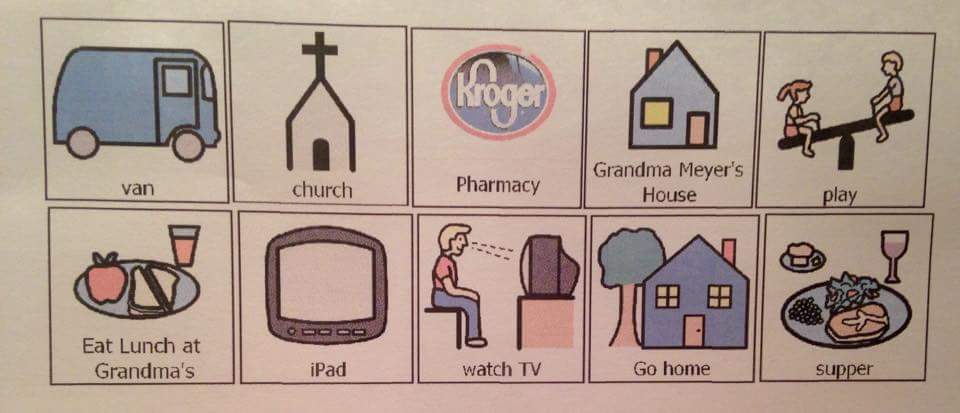
“Go back to bed, it’s too early.” As he wandered back to his room, Kristie knew she shouldn’t get too comfortable. She knew he would come back and he’d probably ask to go to the toy room. Several minutes later, he was back. ” Come on,” she said as she walked with him to the toy room. She laid on the couch and he grabbed his iPad. She didn’t look forward to the next four hours of interrupted sleep on the couch.

On this morning Kristie couldn’t sleep. She settled on the couch and made her best attempt but couldn’t.  Instead she ended up watching her little boy. Her mind began to wonder about all the things surrounding Blake and her oldest son, Drew. She began to rehash the “what-ifs” and all the other parts of her life she tries not to think about. It’s the same inner monolog that plagued her when her oldest son Drew was born, it’s the same crushing thought that wonders what life would be like without Fragile X Syndrome. What if their two boys never had it and what if she never carried it? “What if,” she wispered to herself.

She began to wonder what their life would have been like without all the harsh looks, awful critism, and impossibly difficult days in the  fifteen years since Drew was born. She recalls the worst of moments when a harsh stare was enough to make her family feel unwelcome and how a terrible comment like, “You should stop having those defective children,” seemed to cut her to her soul. She could still feel the same sting she felt fifteen years ago when it was confirmed that Drew had Fragile X.

She sleepily closed her eyes and  began to dream, or maybe it was her imagination but when she opened her eyes, both of her boys stood in front of her. “Hi Mom!” They spoke with unbelievable clarity, each offering arms open wide. “Thank you,” she heard from both boys harmoniously. In her  confusion she also heard, “We know it’s been hard, sorry Mommy.”

“No babies, don’t say that.” She thought she had spoke but the words didn’t come out.

“I love you.”

“I love you ”

Each boy embraced her. The very real feeling startled her awake. It was Blake. He was pushing on her arm. He wanted to watch a movie. It was 4 a.m. She got him settled again, all the while playing back the vivid vision in her head. She returned to the couch and now she really couldn’t sleep. She felt a gnawing in the pit of her stomach. If getting carried away with an impossible notion where her boys weren’t plagued with Fragile X wasn’t enough, she felt like she got a very real glimpse of it. She was very certain her boys would never fully understand the difficulties their family faced daily. The boys didn’t know life without Fragile X, it’s all they knew, but Kristie couldn’t help but wonder.

What would it feel like without the cloud of anxiety that seemed to hover over her boys. The anxiety that make daily schedules a must, especially when plans change outside the normal routine, small difficulties a big deal, and outings that often feel more like a production. The anxiety that causes fear of the unfamiliar. The same fear that causes tension between the boys and sometimes leads to physical outbursts. Most importantly, what would life be like without her own anxiety over every decision made in regard to her boys?

Kristie and her husband wanted to be prepared because they knew they could not afford take the trial and error approach to parenting. They knew they would need support and help with the decisions they would have to make for their boys and a foreknowledge of how to deal with the issues that come with Fragile X. They have attended meetings and conferences to help navigate life with their two special boys. She and her husband couldn’t simply ask, “When will Drew start school?,” they asked questions like, “What’s an IEP?” and “Will this school be able to accommodate his special circumstances?”. They couldn’t anticipate developmental milestones, they had to work hard to help the boys reach them. Each day is hard work and she and her husband often feel like they are fighting an uphill battle. They fight everyday to make life fulfilling for their boys while trying desperately to somehow fulfill their own needs. So they do wonder what would life be like if every decision didn’t feel like a thread that could pull the complex tapestry of their lives apart.

Kristie blinked heavily, “It’s six Blake, let’s get a shower.”

At this age both her boys should be taking showers independently but both boys need help as developmental delays and anxiety keep them from doing it without assistance. Soon she would have to wake Drew who is often hard to get out of bed and often difficult to bathe.  After the routine of morning showers, Kristie either feels ready to approach the day or ready to go back to bed. Today was difficult. Both boys needed plenty of help and verbal cues to prepare for the morning. It felt like an entire day was packed into a mere few morning hours. Already tired and exhausted, she began to make a schedule for the day, but today was proving to be too much. She began to cry.

image

Drew and Blake saw her crying. Drew nudged her and said, “You’re a sad little Mama,” and stormed off but Blake stood for a moment, looked at her, and began to cry.

She couldn’t help but smile through her tears. She looked at Blake and just like any other mom, she saw her baby and wiped away his tears. But Kristie became especially grateful for this moment. There was no anxiety, schedules, or questions, just a moment where she could cry with her little boy. It was a moment when he was moved by her sadness. This small moment reminded her of a great many things.

What would she be like without Fragile X? Would the small and grace given moments such as these be as special? Would she see the world with the same set of eyes if her life wasn’t entwined with it? Undoubtedly, the disease has laced each day with challenges most families will never face, but it has also allowed life with her boys to teach her many things.

She knows patience is not given but learned. She knows even when she has felt like she has failed, there is always an opportunity to try again.

Grace is invaluable. She knows why it is needed because she knows she has needed it.

Love should be given blindly and love is not defined by another’s capacity to reciprocate that love.

“I love you Blake,” she said as he left the room. Kristie wiped her own tears, reminded of why she makes it through each day.

She has been given a gift and although she can’t help but occasionally wonder “what if”, she knows she is filling a greater purpose. Kristie is the woman God has intended her to be, a woman who serves as an example of His unending love and grace. Kristie sees the world with compassion because she has needed compassion, she has patience because she has to endlessly practice it, and she loves her family as selflessly as God wants to love each of us.

Yes, Kristie has grieved the life she envisioned for her boys, she still prays for easier days, and still desires understanding from those she comes into contact with, but with it, she has an opportunity. She knows there will be days when she will wish the world would love and accept her boys as she has but it won’t, she struggles with the inevitable bullying and dirty looks that frequently come their direction, but you won’t see her deny the blessings she has received through each of her boys. Life for Kristie and her family can be hard but they truly love the life they have been given despite the difficulty. They have been given the rare opportunity to show others that true joy comes from the foundation in which you stand.

Kristie knows that on days where she feels like she has had enough, she can still stand because she chose a solid foundation in her faith. It is faith in a God who provides the most joy in what seems to be the most difficult of situations and shines an example of His love through her life. God often uses the broken to do His best work because oftentimes the broken are already asking for His guidance through prayer. No doubt this is Kristie.

At the end of the day, she can look back and thank God she was blessed with another and thankful for the strength to endure. Soon enough the day will start again and she may be tempted to wonder “what if” but she can be assured she will remember why she wouldn’t want to be anywhere else.

image

*d*

A Lesson in Friendship

It’s no secret, I like different and I would love to start a new and unpopular way of thinking that praises the vast differences of the human race. I would love to think we could be a world where people would truly learn to love blindly. I want to share a story with you about my son with special needs and how he might know the very best way to love.

I normally would not go into a debate about social issues and I do not want to with this post. I only want this story to be one to ponder the next time you see strife over various differences in our country.

I believe I have the freedom to believe and the free will to choose my own personal convictions. I also respect the beliefs of others and their freedom to choose their own convictions. That is what our country is all about, right? Freedom? The problem is the inability people have to respect the differences we are all allotted. It can also be difficult to find a middle ground that satisfies an infinite number of beliefs. Here is something that could make the conflict a bit easier to swallow; if your opinions or beliefs differ from another, you have the option to choose kindness. It isn’t likely the debates and arguments will ever end and we will not likely satisfy the millions of varying beliefs, but we can always choose to be kind.

Kindness is something I didn’t have to teach my disabled son. He cares nothing about the differences everyone else is fighting about and he most likely will never fully understand the complex moral debates that have been going on for decades, he’s just nice. He knows how to make friends even though he can’t communicate like a typical child. He calls everyone he knows his friend. Here is a story about my little boy making a new friend.

Last week my aunt came in from Arizona. It has been a long time since she has returned home for a visit and this time she didn’t come home alone. My aunt is gay and she came with her wife. It is the first time we met the woman she has devoted her life to. I hope they enjoyed their time with family. We played games, sat around a campfire, and ate lots of food. My aunt’s wife also made a friend, my seven year old disabled son. She didn’t flinch when he brought her his iPad and wanted her to play. He was rather insistent but she didn’t seem to mind. She sat and played, talked, and made funny videos with him as long as he wanted. He didn’t care that she was new to the family, he could care less about how she dressed or who she married, he liked her for who she was and she liked him the same. She may have noticed that he was different but she didn’t withdrawal from him any of the numerous times he wanted her attention.

To understand this mother’s joy over this event is to know that I understand that it can be hard for some people to interact with my son. He doesn’t always ask to play and he often uses in your face tactics to engage playtime. I understand he can make someone who doesn’t know him very well uncomfortable. But what I saw was a new friendship between two strangers that could have been mistaken for one of life long friends. These two friends really liked each other and no amount of difference between them mattered.

The day after my son met his new friend, he sat with his iPad and watched the videos they made together numerous times. He even remembered her name. After he had his fill of videos, he stood at the door and asked to go to grandma’s house because that is where his new friend was staying.

Those two saw each other as each one of us should see each other, potential life long friends. Their friendship is blind, as it should be. Too bad too many people miss out on a great friendship because of differences. It’s a shame many can’t stand by their own personal beliefs while still embracing those who oppose them. The debate isn’t about beliefs, it about the condition of the heart. My little boy calls those who treat him with kindness friends, it’s that simple. Maybe this friendship has more to teach us than we know.

*d*

Living in the Gray

It’s warm today and she’s resting on her beach chair. The sun warms her face as she quietly hums the song coming from her headphones. The beach is noisy today but she’s trying hard on focus on this relaxing moment. She concentrates on the cool air that wisps across her toes and despite the noise, she drifts slowly off to sleep.

“We’re done,” cuts in a voice that interrupts her music and startles her awake.

“Thank goodness,” she sighs as she begins to move forward and out of the M.R.I. machine. Her daydream was over. She felt fortunate to have drawn her focus away from that confined and noisy space. But a feeling of disappointment came over her. She wished her moment away wasn’t just a dream. In fact, the last few months for her have been like living in a nightmare.

A few months ago she began to feel sick. She was tired, her body ached, and she felt like she was coming down with the flu. She took a couple days off work and when it was time to return, she still didn’t feel better. The weekend passed and she still couldn’t shake what she thought was the flu or some sort of virus. She returned to work and held strong, hoping her symptoms would improve, but they never did. The symptoms and the addition of widespread pain was beginning to disrupt her life. She couldn’t concentrate at work and by the time she got home, the extreme fatigue and pain kept her from keeping up with her normal responsibilities at home. Deep in her heart she knew something wasn’t right.

It began to slide into every aspect of her life and she knew she needed answers. She was disappointed to learn that when she went looking for answers, she’d only end up with more questions.

“So, what’s wrong with you?” she would be asked.

“I don’t know.”

“What do you mean you don’t know? Didn’t you just have an M.R.I.?”

“I did but they couldn’t find anything,” she said feeling defeated.

“All that money spent for nothing?” Her heart sank hearing those words. She had hoped others would see her quality of life would be worth the investment.

The time and money she invested in searching for an answer was only feeding her increasing guilt, but she kept reminding herself of why she was searching. She often had to keep going even when she felt like the doctors had also given up.

“The doctor gave up on me when I didn’t fit the diagnosis he had in mind, please don’t give up on me too.”

No one wants a diagnosis, but everyone deserves a chance for treatment and hope for a better quality of life. Those living in the gray area between health and a diagnosis are lost. They are always searching, researching, and asking questions. They are often submitting themselves to tests and seeing various specialist when they know the financial strain and time consumption involved. They are not crazy, their symptoms are not in their head, and yes, they are suffering. They are like Erin in my story. She is an intellegent, loving mother of two who works for a living. She is active in the lives of her children, but she also knows something with her health isn’t right.

The woman in the story could be my own mom who searched for 55 years before receiving a diagnosis. She could have been me. I knew something wasn’t right with my own health for over ten years. After various doctor’s appointments and all of the same tests and questions, I found my own diagnosis after plenty of research. My diagnosis finally came after I asked my physician, “Could you please test my blood for Rheumatoid Arthritis?”

People seaching for a diagnosis want you to know:

I am suffering.

I do need answers.

I need support and understanding.

I need help.

Do not judge me.

Don’t ask me questions about my search and then cut me down.

Please don’t offer alternative healing until I have a diagnosis.

Don’t tell me it’s all in my head.

Listen to me.

As for Erin, she is going to keep searching because she needs answers so she can have hope for a better future, for herself and for her children. She desperatly desires the chance to experience life without the disruptive symptoms attached to an unknown diagnosis. She deserves to get up each day and know what she’s facing. She deserves a chance for a fair fight. She and all people living in the gray zone of the undiagnosed want and deserve the same.

*d*

image

Chasing a Diagnosis

We sat on her family room couch sorting through her photos. Occasionally one of us would stop and show the other a photo, laughing or reminiscing about the story behind it. I felt like a kid again, sitting in my childhood home reliving old and happy memories with my mom. Then she paused, her fingers resting on a photo. The smile had vanished from her face. “What? What is it?” I asked. I noticed her demeanor had changed.

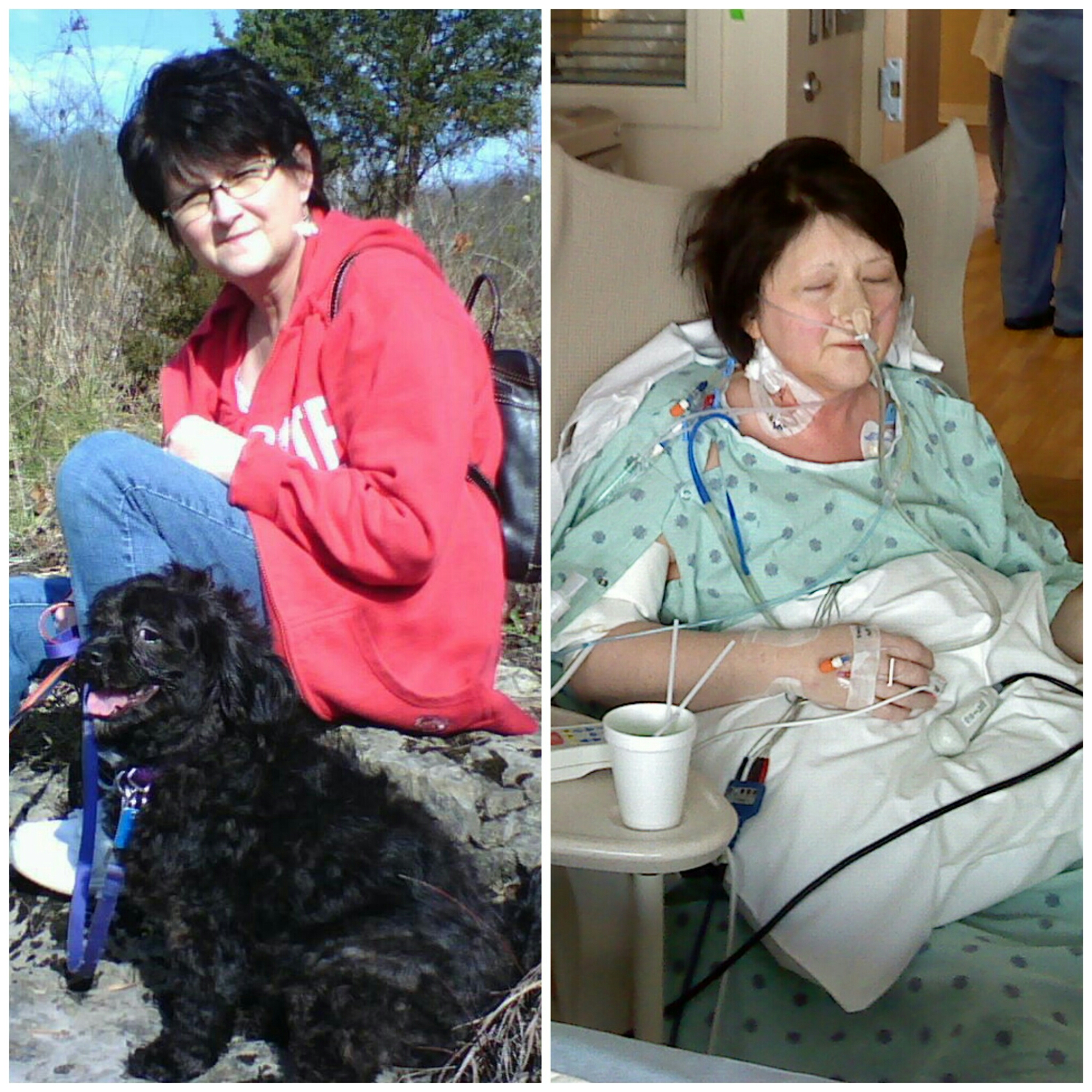
“I don’t remember having this taken,” she said in a somber voice. I leaned over to look at the photo she still had between her fingers. It was a photo of her at the hospital two years ago after a major surgery called a Whipple Procedure. She looked at me as if to question if she was really the one in the photograph.

“That’s you,” I assured her. “You looked awful,” I said, trying to hold back my tears. “I am glad you don’t remember.”

“Me too,” she said as she slid the picture from her fingers into my hand.

I sat and studied the photo for what seemed to be an eternity. She was sitting upright in a chair next to the bed in her hospital room, a pillow draped over her lap. The hospital gown barely covered all that was coming out around her. A tube was coming out of her nose and one was also coming out of her neck. Looking at the photo seemed to leave my mom in some sort of disbelief. She had no recollection of the days following this surgery and although the photo looked like her, she acted as if she had just seen a ghost. I knew it was my mom in the photo, but I too thought she looked like a shell of the woman I have always known. Her pain was so intense after this surgery that I can only describe the look in her eyes as empty pain. It’s the kind of pain that demands complete submission to it. And there she was in a photograph, a momento of pain.

She and I had a haunting glimpse of a time two years ago we would both prefer to forget. It was the first time I seriously doubted whether or not my mom would make it through a surgery. This surgery was different than the ones she’s had previously. This was a rare procedure that required a skilled surgeon and would not guarantee her a better future or survival. When faced with such uncertainty, I thought about the holidays we had shared over the last year and wondered if we had truly enjoyed those moments together. I didn’t want to think about having the next holiday without her. It also made me think about my own selfishness and the times I didn’t grasp what life has been like for her. As long as I can remember my mom has been battling an invisible enemy. My mom was born in 1953 and in 2008 she finally found out what has been causing her life-long pain. She has a hard to detect birth defect called Pancreas Divism (an abnormality of the ducts of the pancreas) and Spincter of Oddi Dysfunction (a dysfunction of the muscle(s) that help control the flow of pancreatic juices). This and the treatment of which caused Chronic Pancreatitis. These abnormalities cause the syptoms she has felt since childhood: pain in the upper right quadrant of the abdomen or in the back, epigastric pain (especially after meals), abdominal swelling, nausea and/or vomiting. All of these symptoms during her lifetime were mistaken for various other ailments, so mom spent 55 years of her life undiagnosed and suffering.

“I’m sorry,” I whispered from under my tears.

“About what?” she asked, sounding surprised.

“For not being more supportive,” I continued. “I can’t imagine what it was like to be in so much pain, especially when so many people stopped believing you.”

“I had to keep going. I knew something was wrong, but I hate that it took so long to find out what it was.”

Her problems began in childhood. She had unexplained pain that grew more intense into adulthood. Because she so desperately sought an answer, she has had a staggering number of surgeries in her lifetime. Some surgeries to fix specific problems and others were an attempt to find the source of the returning pain. There is no doubt it was hard for her to continue to fight for her own health when others had given up.

She hugged me and we sat silently, maybe pondering the moments we lost. Her story has touched me more deeply in the last year. I was recently diagnosed with Rheumatoid Arthritis and I too will most likely be dealing with a lifetime of chronic pain. The difference between her story and mine is defined by one word: diagnosis. When my blood was drawn last year, I didn’t want a diagnosis but once I got it, I was validated. My pain wasn’t an illusion and I could begin treatment. My mom had spent most of her adult life chasing a diagnosis.

So, why was it so hard for her to chase a diagnosis? The hospital and medical bills became a rotating door for my mom even though she and my dad were already struggling financially. Money wasn’t the only reason she was discouraged from returning to the hospital or seeking out another specialist. She’d frequently hear comments like, “If they can’t find anything wrong, then what is it?” or, “You don’t look sick.” And all the while she would feel discouraged and invalidated for her suffering. Years of hearing other’s doubt made her doubt herself and that led to depression.

“How have you done it over the years?” I asked. “How did you live with chronic pain, especially when you had no idea what was wrong? Weren’t you angry?”

“It isn’t easy,” she explained. “Getting angry about it wouldn’t have helped. I knew my body and I did what I had to do. I have also learned not to hide from my depression.”

When my mom finally had diagnosis in hand, the only treatment available was risky and didn’t guarantee a better quality of life. The first procedure landed her in the hospital with acute pancreatitis. I visited her during this acute flare in 2008. Her pain was so intense that she was given large doses of pain medications and food was held until her pancreatic levels decreased. When I saw her, she was out of her head and desperate for food. Every year since 2008 is speckled with memories that she and I would rather forget. Awful memories where my mom and I began having an unspoken understanding about her health and death. These moments would shame the people that would doubt her illness when they’d say, “You don’t look sick,” doubt her pain because she wasn’t constantly folded over from it, or those who were perplexed because they couldn’t see her disability with their eyes.

“Mom,” I said, “you are amazing. I can only hope to have half of your strength.”

“I’m not any stronger or braver than you.”

I heard what she said but doubted the truth in it. I didn’t have the same difficulty before I had my answers. There are many people, like my mom, who are chasing a diagnosis. They spend every day in real pain and desperate for answers. They persevere even if they have to do it alone. My mom did what she knew was right despite adversity. Fighting the unknown is one of the bravest battles one can face. She isn’t the only undiagnosed individual fighting for answers so don’t judge someone based on outside appearances or speculation. Offer support because even when someone is fighting the unknown, they are still fighting.

*d*

image
Why "You don't look sick" isn't a good thing to say.

Signs of acute pancreatitis:

Sudden intense pain in the middle of the upper abdomen and the pain may radiate to the back. This pain may begin 12-24 hours after a large meal.

Fever, nausea, vomiting.

Cammy skin or rapid pulse.

Tenderness or distention of the abdomen.

Signs of chronic pancreatitis:

Abdominal Pain that may radiate to the back or chest that is intense and long lasting. It may be intermittent or persistent.

Stools that are excessively foul or bulky.

Nausea, vomiting or abdominal distention

Weight loss because of malabsorbtion of foods

Development of diabetes if pancreas becomes damaged.

Source: webmd.com

A Ride Called “Disease”

A group of teenagers push wildly through the crowd and down the fair midway. At the tail end of the group, a reluctant girl is holding the hand of a boy sporting a cheesy grin. “Come on,” he pleads as he pulls her hand in the direction of the rides.

“I really don’t want to,” she insists as her steps narrow and her pace slows. Both eventually stop to talk and after a pathetic glance from the boy, she relaxes her shoulders in submission and follows. He spots his friends rough housing in front of the ferris wheel. She protest, “No, I don’t like those things and this one doesn’t look safe.”

“Awww, it’s fine,” he coaxes. She could sense the doubt in his voice.

“Come on!!” the group taunts as she sides her way into line. The ride is old, very old. It has been a right of passage for many other teens. The long held tradition has included rocking, screaming, and bouncing the rickety ride as if to dare it to crumble.

“Don’t move our seat,” she whispered abruptly as they loaded.

“Sure,” he assured as he sheepishly grinned to his buddy in the next seat. Not long after they loaded, the rowdy group began screaming and yelling but they remained still until the last seat was loaded. None took the chance of being kicked of the ride prematurely. After the old ride was started and at full speed, the chaos started. Violent shaking, bouncing, and attempts to stand up over the seat bar began. The operator began shouting but they continued on. The girl held tight to her boyfriend’s arm but his assurance to remain still did not last. He began flipping the seat forward as hard as he could and she began to scream in fear.

“Let me off, I want off now!” she demanded as she drew as far from him as she possibly could. Her trust had been broken.

“We’re just having some fun,” he said as the ride came to an abrupt stop. The operator was now cursing as he began unloading the riders. An argument between the girl and her boyfriend ensued. He offered a half hearted apology only after she began to cry. His remorse lasted until he was reunuted with his group of friends at the base of the ride. Then he sneered and thanked her for embarrassing him in front of his friends. He turned away abruptly and lead the group down the fairway, the girl crying while scurrying behind. In confusion, her focus now became how she could make it up to him.

***

I can definately relate to this story as I was that confused teenage girl years ago. Thank goodness I can laugh about it now and I am thankful that I have matured but that isn’t the point I am trying to make.

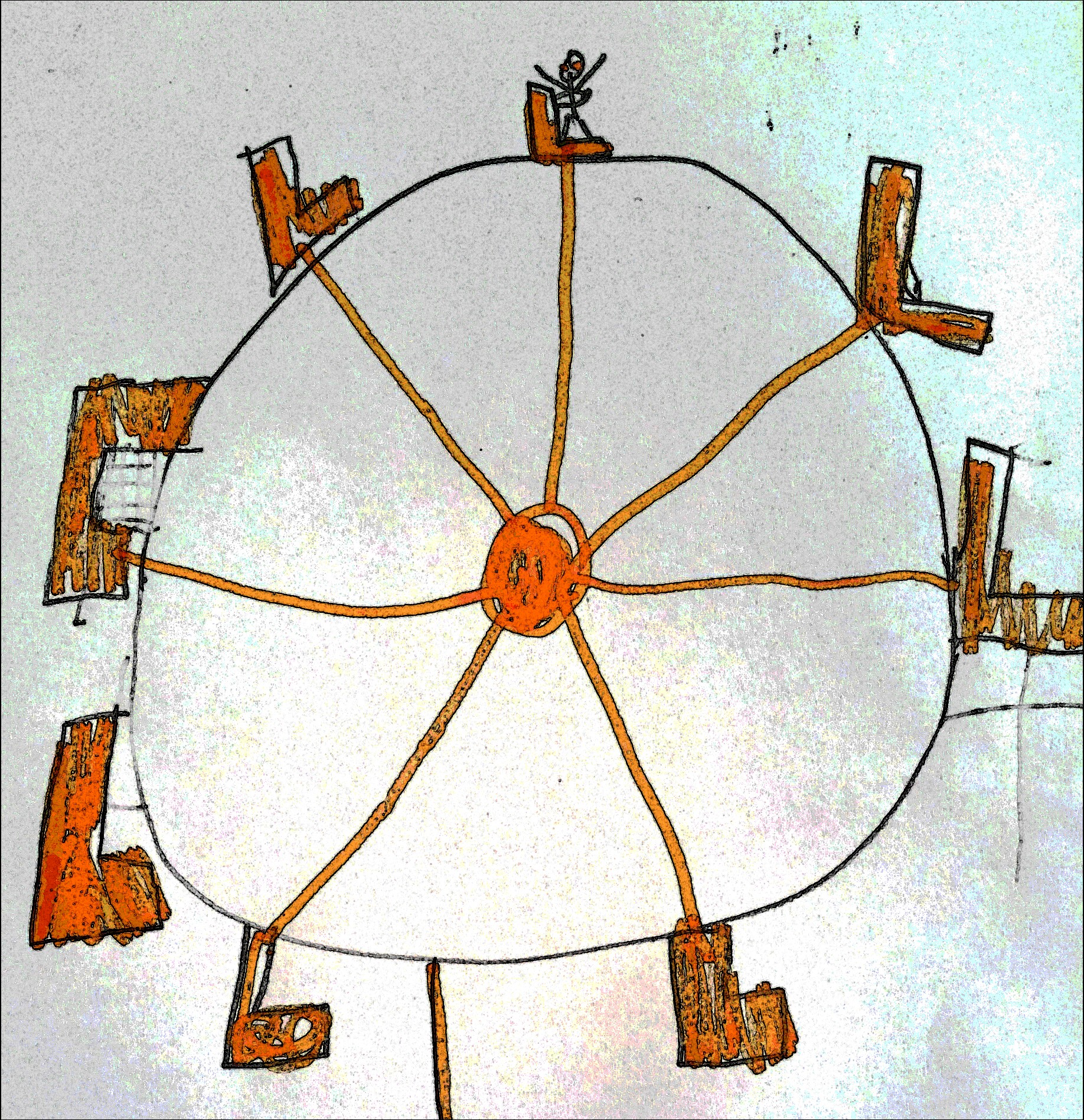
Instead this story is quite the apologue of the last few months of my life. A few months ago, I reluctanly stepped onto a rusty, old ferris wheel. It’s name was “Disease”. Despite it’s unsafe appearance, I convinced myself that I would be okay with “Disease”. Soon I had a passenger and it’s name was fear. I thought I had made peace with “Disease” and I wondered why fear had joined me.

“It’s okay, sit with me,” fear assured, “I’m a friend.”

“Disease” creaked and groaned but I didn’t get too nervous. I was familiar with the ride and I knew a few of the other reluctant riders. Then when the chaos broke out, I pulled myself closer to fear. “That’s right,” fear hissed as it violently began flipping my seat forward. I held tight to fear as the violent forward motion made me feel as if I were going to fall from my seat. Yet, I felt no comfort and my fears increased tenfold. The high and low of the ride now felt like they were coming too quickly. I was now frozen and with fear. I wanted off the ride, now! 

I began devising my own plan to escape. In the meantime, I tried to find some other way to brace myself safely into the seat. I couldn’t see anything, nor could I move. Something was sabotaging my safety. It was the fear still strapped in beside me. Not only  strapped in, but I was still locking arms with it. I had put all my trust in fear only to be deceived. I felt as betrayed as the girl in my story, but I knew I had to let it go. It was only when I let go that I could clearly see; and when I looked, I saw my son. He was riding alone in another seat. I had forgot about him.

Yet, there he sat looking out alone beyond “Disease”. I was staring at him while he began to make his way to the top. As he approached the top, he began to clap, and yell “Woo hoo!” He was happy and I was puzzled.  He wasn’t focused on the ride, he was focused on the view. He could certainly see the sky, the stars, the entire world from his vantage point.

For the first time, I slowly sat back and decided to try to see “Disease” as my son saw it. As I reached the top as he did shortly before, I was amazed of the view “Disease” gave me. I could see life from a vantage point few others could experience. Once I released fear, I was able to appreciate the view. Without fear, every movemment no longer made me nervous. I remained focused with my head held high. As I looked  I finally “got it” and I won’t soon forget what my little boy taught me about “Disease”. It can change you by fear or change your perspective. Fear wants to destroy and I’d much rather follow his example and keep living despite of fear.

Unlike the example in my story, my happiness didn’t have to be defined by who sat closest to me. My focus needed to be on anything that helped me break free from my own immaturity of the situation. Isn’t it amazing how my little boy helped change my heart and lead by example? “Woo hoo!”

*d*

image

The Road of Suffering and Honesty

image

There have been plenty of times when I have wished I could be someone else. This usually happens when the “envy monster” whispers in my ear, “Look who has it better than you,” or “They have it all!”  and I get the feeling in the pit of my stomach that groans about how life has been unfair to me. It’s hard when I hear when these same people have purchased a new car or won the lottery and the only “lottery” I feel we have won is that of incurable and obscure diseases. While other parents think about vacations, taking kids to practice, and play dates, we may never afford future vacations, I am often debilitated due to my Rheumatoid Arthritis, and I have to consider my son’s medical and behavioral issues if the rare opportunity for a play date arises. I think about illnesses every day. It is consuming and it eats away at my me. Bit by bit, the worry, guilt, and fatigue has at times compiled into depression. It would seem happiness is far fetched on the uphill battle we often face, but it isn’t. I can affirm that I have experienced envy, guilt, anxiety, depression, and sadness at the hands of multiple diseases. They have robbed me of sleep, peace of mind, and the luxury of quick decisions. Everything in our life has to be carefully thought out and planned. Life is lived one day at a time and we are sometimes barely getting through the day. So why am I so happy?

For one, I live by faith and believe my life has a greater purpose. I believe I have learned to be a better person through all of my suffering. Suffering is inevitable and to many, suffering is pointless but I dare you to consider the contrary. I have had a better look at the lives of others who have suffered around me by experiencing the same. I was ignorant and there was so much I didn’t understand until I also had to experience my life at it’s lowest. It was from the bottom where I could appreciate the strength of people who were experiencing great difficulty. It was also there where I became more aware of my weaknesses and failures and desired to be a better person. I learned how to find strength and happiness in the face of adversity.

It sounds simple but I no longer hold myself to an unrealistic standard. I allow myself to feel envy, sadness, and heartache and it doesn’t make me a bad person.  Too often, I feel like I have to live up to some ridiculous, unspoken standard that says I have to be happy, or at least pretend to be happy all the time. I don’t. Life has been unfair, other people do seem have it better, and there are numerous health issues in my family. The pain is real so shouldn’t the acknowledgement of my own feelings also be real? Once I decided this, I also stopped sugar-coating my response to the question, “How are you?” I give an honest answer and if someone didn’t really want to know, they will not likely ask again. When did it become necessary to omit difficulty out of normal conversation? Difficulty is a part of life. Why should I feel guilty about talking honestly about my life?

I have also put unnecessary guilt to rest. I have spent too much time feeling guilty about things I could not prevent or did not cause. Guilt by its own definition should only be felt when one purposefully does something in contrary to what he or she knows is right. Trying my best is not something I should feel guilty about. Life should not be based on hypothetical scenarios that can’t changed. What’s the point? I also stopped feeling guilty about what I could not do. If life demands that I leave the laundry pile up and the house remain dirty, so be it. My house and my laundry will wait for another day.

On that note, I stopped telling myself that I had to maintain the perfect image. I made myself crazy cleaning house, painting walls, and making everything around me look perfect when I was falling apart on the inside. Yes, sometimes having other areas of my life in order helps me feel better but it should never take priority over my own or the children’s needs.

Lastly, I remind myself that everyone is struggling with something, even those people I envy and people like me who try to maintain that perfect appearance on the outside. Honesty can be very freeing. I appreciate those who are also honest when I ask, “How are you doing?” It helps to know I’m not walking the difficult road alone.

*d*