A Very Happy Birthday Little Buddy

image

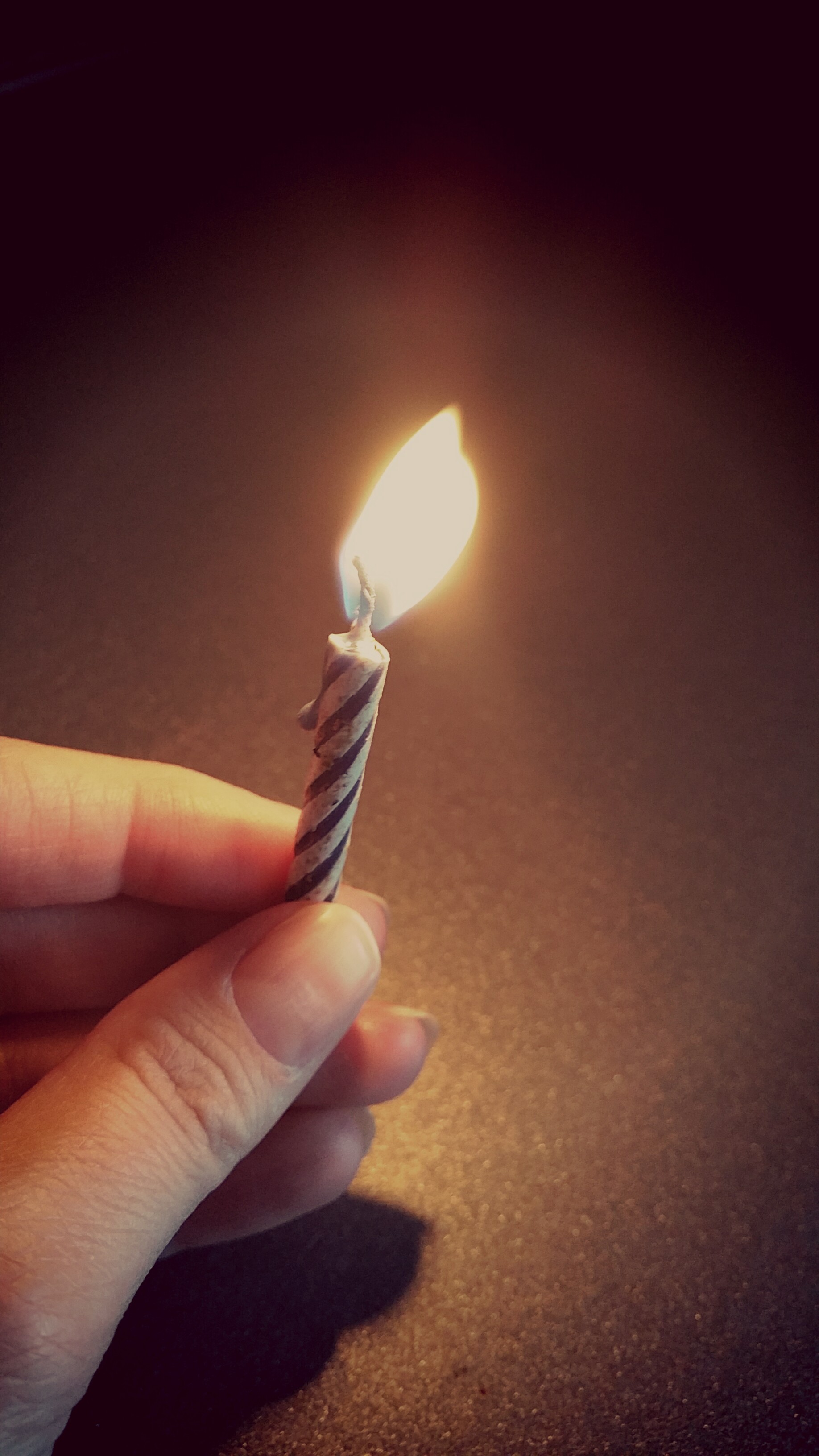
It’s a quarter till eight in the evening and three of my children surround my husband in our living room. Each are taking turns blowing out a birthday candle and singing the Birthday Song. My special needs son is singing his very best version of the song and inserting various family member’s names into the chorus. No one is celebrating a birthday today, no one is celebrating a birthday this week but we are celebrating.

My son has struggled with autism for the last five years. For the first two years after his primary diagnosis, he was not diagnosed with autism despite his self-injurous behavior. As he grew, additional autistic behaviors became more evident. It was clear he was having a hard time dealing with the world around him. From a terrible experience at Disney World to family gatherings, he was unable to tolerate loud noises and crowds. Birthday parties were the worst, even his own. He didn’t like singing or clapping and the appearance of a birthday cake sent his anxiety skyrocketing. We decided after many attempts to encourage him to participate, we would leave the room with him during the singing and blowing out of the candles. It was hard for some family members to understand this when we celebrated his birthdays but we found other ways to acknowledge his special day.

Since the addition of a new medication to treat his disease, we have slowly seen developmental progress. He has been on it for over two years and his language has improved, he has gained some understanding of the world around him, and he has been able to tolerate noise and crowds much better. We will never be able to redo our vacation…. but we can help him enjoy those experiences he once missed out on.

Last Christmas my son was six and it was the most amazing Christmas with him yet. He was interested in opening gifts where he hadn’t been before, he was excited about the Christmas lights, and he was able to sing us numerous songs he learned at school. It was a holiday of many celebrations. We also noticed he began to enjoy birthday parties and we were stunned when he refused to leave the room for the birthday song. We expected tension and got excitement. So on his seventh birthday, one he shares with one of his little sisters, we made up for the previous years. He was very excited to open gifts on his own, socialize with family, and blow out the birthday candles after singing the Birthday Song. We sung and blew out the candle six times. He was excited each time.

Disability can take these kind of moments away, little moments most people may take for granted. Experiencing these once seemingly unobtainable moments is where I find joy. I cried when I watched him independently write his name, watched in amazement as he sat peacefully playing with toys he has never touched, felt my heart jump in excitement as he ran upstairs to get the Barbie car out of his sisters’ room so he could play with them. It’s those moments when I can let go of the worry and see the little boy under the disease. It’s the little boy who likes the color purple, who loves trucks (he was recently able to verbalize this to me), enjoys watching and playing bowling, loves everything Barbie, and is wonderful just the way he is. It’s time for the world to stop pointing out the same mundane differences. Experiencing deep joy with someone usually happens when we accept and celebrate one another just the way we are, even if it means celebrating the little things that give us that joy together. Happy birthday little buddy!

*d*

The Road of Suffering and Honesty

image

There have been plenty of times when I have wished I could be someone else. This usually happens when the “envy monster” whispers in my ear, “Look who has it better than you,” or “They have it all!”  and I get the feeling in the pit of my stomach that groans about how life has been unfair to me. It’s hard when I hear when these same people have purchased a new car or won the lottery and the only “lottery” I feel we have won is that of incurable and obscure diseases. While other parents think about vacations, taking kids to practice, and play dates, we may never afford future vacations, I am often debilitated due to my Rheumatoid Arthritis, and I have to consider my son’s medical and behavioral issues if the rare opportunity for a play date arises. I think about illnesses every day. It is consuming and it eats away at my me. Bit by bit, the worry, guilt, and fatigue has at times compiled into depression. It would seem happiness is far fetched on the uphill battle we often face, but it isn’t. I can affirm that I have experienced envy, guilt, anxiety, depression, and sadness at the hands of multiple diseases. They have robbed me of sleep, peace of mind, and the luxury of quick decisions. Everything in our life has to be carefully thought out and planned. Life is lived one day at a time and we are sometimes barely getting through the day. So why am I so happy?

For one, I live by faith and believe my life has a greater purpose. I believe I have learned to be a better person through all of my suffering. Suffering is inevitable and to many, suffering is pointless but I dare you to consider the contrary. I have had a better look at the lives of others who have suffered around me by experiencing the same. I was ignorant and there was so much I didn’t understand until I also had to experience my life at it’s lowest. It was from the bottom where I could appreciate the strength of people who were experiencing great difficulty. It was also there where I became more aware of my weaknesses and failures and desired to be a better person. I learned how to find strength and happiness in the face of adversity.

It sounds simple but I no longer hold myself to an unrealistic standard. I allow myself to feel envy, sadness, and heartache and it doesn’t make me a bad person.  Too often, I feel like I have to live up to some ridiculous, unspoken standard that says I have to be happy, or at least pretend to be happy all the time. I don’t. Life has been unfair, other people do seem have it better, and there are numerous health issues in my family. The pain is real so shouldn’t the acknowledgement of my own feelings also be real? Once I decided this, I also stopped sugar-coating my response to the question, “How are you?” I give an honest answer and if someone didn’t really want to know, they will not likely ask again. When did it become necessary to omit difficulty out of normal conversation? Difficulty is a part of life. Why should I feel guilty about talking honestly about my life?

I have also put unnecessary guilt to rest. I have spent too much time feeling guilty about things I could not prevent or did not cause. Guilt by its own definition should only be felt when one purposefully does something in contrary to what he or she knows is right. Trying my best is not something I should feel guilty about. Life should not be based on hypothetical scenarios that can’t changed. What’s the point? I also stopped feeling guilty about what I could not do. If life demands that I leave the laundry pile up and the house remain dirty, so be it. My house and my laundry will wait for another day.

On that note, I stopped telling myself that I had to maintain the perfect image. I made myself crazy cleaning house, painting walls, and making everything around me look perfect when I was falling apart on the inside. Yes, sometimes having other areas of my life in order helps me feel better but it should never take priority over my own or the children’s needs.

Lastly, I remind myself that everyone is struggling with something, even those people I envy and people like me who try to maintain that perfect appearance on the outside. Honesty can be very freeing. I appreciate those who are also honest when I ask, “How are you doing?” It helps to know I’m not walking the difficult road alone.

*d*

Of Fire and Clay

image

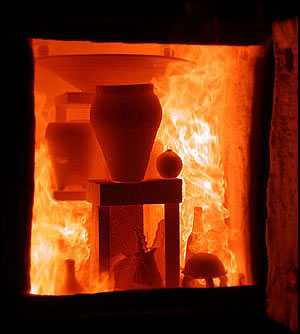
Pottery has been around for centuries and the techniques have been used by a variety of people from poor farmers to Egyptian Pharaohs. Because it abundant and readily available, clay was cheap. The need for pottery was as vast as the type of people who used it. Farmers could use simple pottery to hold grain while Pharaohs used elaborate pottery to hold sacred items for burial. In almost every culture, pottery was an easy way to create a piece of art. The process of creating a piece of pottery leaves the unformed glob of clay unrecognizable by the end of the refining process. To get the unshaped clay to a useful or artistic piece, it is molded by the potter’s hands, shaped into the desired form, and placed into the kiln to harden. Firing the clay is an important step so it can be strong enough to fulfill its desired purpose. Everything from the season’s yield to the treasures of an ancient culture would be held in pottery and the pieces had to be strong enough to withstand fracture and prevent it from losing its contents. The more artistic pieces were especially desired to withstand the tests of time and were often heated at higher temperatures. Not all types of clay can withstand the higher temperature so only special types of clay were used. This special clay creates the beautiful, extremely durable porcelain. It is unimaginable to think that clay consists of no more than a few natural elements.  According to dictionary.com, clay is partially defined as the following:

1. a natural earthly material that is plastic when wet, consisting essentially of hydrated silicates of aluminum: used for making bricks, pottery, etc.

2. earth, mud.

4. the human body, especially distinguished from the spirit or soul; the flesh

The body being defined as clay? In the simplest definition, the human body is made up of a handful of elements, mostly consisting of water. Humans and clay are essentially made of the same basic elements. Unlike the human body, water is added to clay to form what is desired by the potter’s hands. Without the work of the potter, the clay would remain with the earth. The body, being defined as that of clay, could also be seen in this simple context, from the earth, to the earth. Let there be no mistake, the human body is more complex than a jar of clay, but like clay, it can be shaped to hold the greatest treasures and has the potential to become a beautiful piece of art.

It isn’t uncommon to see people turning their bodies into their own versions of art. Tattoos are less the taboo that they once were. Adorning the body with pieces of art through tattooing takes time and can be painful. To the person desiring the tattoo, the expression of the work is usually well worth the pain of getting it. It has also been widely acceptable in America to have piercings. The brief moment of pain and subsequent care after the piercing is worth the look achieved. In both examples, the outcome of the initial pain was known and a decision was made to endure pain and/or the care involved. Such a process would be less desirable if the outcome was unknown and the only information given was a promise of beauty. That would take a great deal of trust and not being assured of the end result could cause anxiety and less of a tolerance of pain. Ask anyone who paid for a tattoo that ended up looking more like the doodling of a two year-old or the small percentage that got an infection from a piecing. Instead of beauty, they received a problem. Decisions such as these would be simpler to make if there was foreknowledge of the result. Since there is no way to know how the experience will end, asking questions can help make the best decision. If clay could ask questions or talk, what would it say to the potter?  It certainty would want to know what the potter intended for it, but what else?

“You want to make me a water pot? No thanks, I’m too good for water.”

“There is no way you are throwing me into that fire!”

“I’d prefer if you didn’t paint me blue.”

Fortunately for history, clay made no such demands or statements. Human ancestors molded and fired the clay to serve a purpose and clay is still serving a purpose today. Finding a purpose for the human existence is vastly different than that of clay but it can help define a purpose. Both start out as a shape unrecognizable to the finished result. Humans at some point in the womb resemble a tadpole more than a human but with time, develop all the necessary components. Witnessing a heartbeat via ultrasound when the baby is no more than a few weeks gestation is no less than astonishing. A heart that will beat thousands upon thousands of times in a lifetime begins so miniscule inside a mother’s womb.  In the womb is where the molding process begins. First with the physical form and then as the child grows, the internal. Parents nurture and protect children and try to shape them into responsible and respectable adults. Parents nurture the aspects of a child’s life to help him or her understand the world and prepare for the fire that will eventually come. And this shaping by fire never ends. Into adulthood the experiences shape existence, while still relying on the early work of the parents. All with the hope the now adult can navigate the world alone. Unlike the clay, humans can ask questions on what they will become.

“Why am I here?”

“Why has this tragedy happened to me?

“Am I strong enough to endure?”

Also unlike the clay, life is shaped over a long period of time and the fire doesn’t come all at once. Sometimes the fire is hot enough to harden only the outside and protect what is within and other times, the heat is so intense that it hardens on the inside and out. The true works of art are those formed with the most intense heat, whose flames are not meant for every piece of clay. Those special pieces are chosen carefully and will have lasting strength and beauty. Because the end result of these rare pieces is beauty beyond compare, it takes time and trust in the process. These rare works of art can hold the most valuable possessions and stand the test of time. No, money cannot buy an average piece the result meant for the rare and it’s not worth the value gained by experience. A plain pot can be painted, decorated and made to resemble what intense fire has fused but it cannot have equal strength.

Are you the rare pot? Have you been asked to carry the heavy burdens? Because the heat is so intense, the process for the rare pot is painful and there is no knowledge of why and how the fire will result in beauty. Often times questions have to remain unanswered and trust wears thin but like the rare pot, the experience in the hottest fire yields invaluable experience. Each time the rare pot is exposed to the next round of heat, the harder it gets and the value of the treasures entrusted grows. What gem has been entrusted to you? Maybe it is the most delicate that must be placed in the strongest of places. If you are asked to endure the intense flames, your beauty will only shine more brightly every time you endure. Unlike the common, this beauty isn’t by choice and can only be seen at the surface but has been shaped and formed changing the very elements of your life. Don’t get discouraged you rare and beautiful piece, welcome the fire, for each flame brings you closer to unmatched beauty.

*d*

Image found via search engine and credited to http://www.pinterest.com